The Countdown Across Europe: Bomb Threats Disrupt Broadcasters and Put Aviation on Alert
A growing wave of bomb threats across Europe has expanded from passenger aircraft to television broadcasters and other media organisations, triggering evacuations, temporary programming changes and fresh security operations. Ireland's public broadcaster RTÉ and Bulgaria's Nova TV received threatening emails, while Britain's Sky also reported a security threat. The developments came as airlines and airports continued dealing with repeated alerts that have disrupted flights across several European countries.
The messages sent to broadcasters reportedly warned that an explosive device would detonate within 45 minutes. One email was headed "Message to the West" and was signed by a person claiming to be Mikhail Andropov, who purported to represent a group responsible for earlier threats. However, investigators had not established the sender's identity or confirmed whether the messages were connected to the threats against passenger flights.
No explosive devices had been found in the reported incidents. Nevertheless, the threats were treated seriously by broadcasters, police and aviation authorities because of the potential consequences of ignoring a genuine warning.
Key Details of the European Threats
- Broadcasters affected: RTÉ in Ireland, Nova TV in Bulgaria and Sky in the United Kingdom reported threats.
- Other Irish media organisations: Virgin Media, Newstalk and The Irish Independent were also reported to have received hoax threats.
- Threatening message: Emails carried the heading "Message to the West" and included a warning about a possible explosion within 45 minutes.
- Broadcast disruption: RTÉ temporarily changed programming and evacuated staff; Nova's newsroom was evacuated and searched.
- Aviation impact: Flights faced diversions, inspections and military escorts in several countries.
- Explosives found: Authorities reported no explosive devices in the incidents described.
- Responsibility: The identity of the sender and any connection between the separate threats remained unconfirmed.
Television Broadcasters Receive Threatening Emails
The latest development in the unfolding security situation came when several European media organisations reported receiving bomb threats. The messages appeared to warn of further disruption and were presented as part of a wider campaign targeting transport and civilian infrastructure.
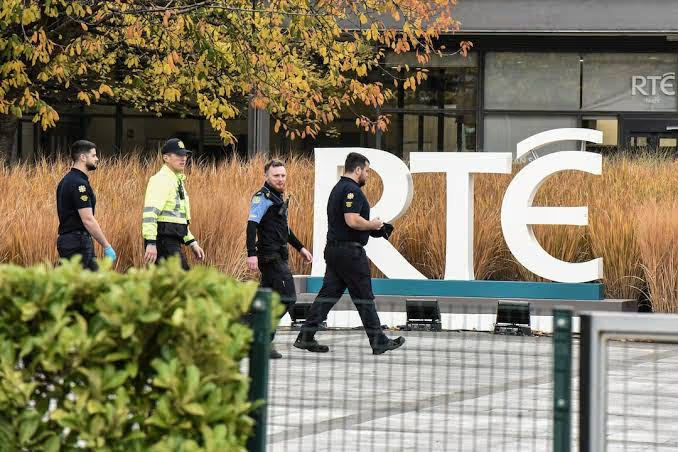
Ireland's national public broadcaster RTÉ received an email on Friday morning that warned of an explosion within 45 minutes. Staff, including radio and television presenters, were temporarily evacuated from the broadcaster's Dublin premises while the threat was assessed.
RTÉ temporarily replaced scheduled programmes with music and a recorded message. Normal broadcasting resumed after the security response, with the interruption lasting for a period of up to approximately three hours.
Bulgaria's Nova TV also received a threatening email. Its newsroom in Sofia was evacuated and searched by security personnel. Authorities subsequently declared the premises safe, and the broadcaster was able to continue its transmissions.
British broadcaster Sky confirmed that it had received a security threat. The company said it had carried out a security assessment and reported the matter to the relevant authorities.
The threats were not limited to television organisations. Irish authorities said that Virgin Media, Newstalk radio and The Irish Independent newspaper had also received hoax bomb claims.
The "Message to the West" Warning
The emails sent to RTÉ and Nova TV reportedly used the subject line "Message to the West" and were signed by someone identifying themselves as Mikhail Andropov. The sender claimed to represent a group and suggested that further disruption across Europe was coming.
The messages reportedly included a countdown warning, claiming that an explosive device would detonate within 45 minutes. The wording and timing created an urgent situation for the organisations receiving them, requiring immediate security assessments and precautionary action.
The name used by the sender and the content of the emails raised questions about possible political motives and whether the threats were intended to suggest a connection to Russia. However, the identity and origin of the messages had not been independently established.
Flight Disruptions Spread Across European Airspace
The threats against broadcasters arrived amid several days of disruption to European air travel. Passenger aircraft in multiple countries had received bomb alerts, prompting emergency inspections, diversions and, in some cases, military aircraft escorts.
On Friday, Czech police registered threats involving nine flights departing from or arriving at Prague. Airport officials said no flights had been cancelled as a result of those alerts, and no explosives were found.
France reported four new threats involving aircraft flying over its territory. All affected planes landed safely. In Hungary, fighter jets escorted passenger aircraft travelling through its airspace after threats involving flights from Brussels to Sofia and from Prague towards Bucharest and Cyprus.
Denmark's police also investigated threats directed at air traffic at Copenhagen Airport. Authorities said their initial assessment indicated no danger to passengers, and the airport reported that it was operating normally.
An aircraft travelling from Prague to Rome was diverted to Venice following a threat. Other flights were subjected to precautionary checks, while a number of aircraft across the continent continued to their destinations after security assessments.
More Than Two Dozen Flights Were Disrupted Earlier
Friday's incidents followed a particularly disruptive day on Thursday, when more than two dozen passenger flights across Europe were affected by bomb threats. Some aircraft made unplanned landings, while others were escorted by fighter jets or inspected after arriving at their destinations.
Earlier incidents had also affected flights operated by several major airlines, including Ryanair, Wizz Air, Air Serbia, Finnair and other carriers. Threats were reported in different countries and on routes connecting major European cities.
Some aircraft were diverted to alternative airports, while others landed as scheduled and underwent security inspections. In several cases, passengers were asked to disembark while authorities checked the aircraft and luggage.
The repeated alerts have created additional pressure on airlines, airports, air traffic controllers and security agencies. Even when a threat proves to be false, the required response can affect flight schedules and cause delays beyond the aircraft directly involved.
Why Authorities Are Taking the Threats Seriously
A bomb threat does not need to be genuine to cause significant disruption. Airlines and airports must assess each warning, coordinate with police and aviation authorities, and take precautions when passenger safety could be at risk.
Depending on the circumstances, a threat can lead to an aircraft being diverted, passengers being evacuated, luggage being searched or airport operations being temporarily restricted. When several countries receive alerts within a short period, the response becomes more complicated because authorities must coordinate across national borders.
The latest incidents have demonstrated how a relatively small number of threatening messages can affect multiple parts of everyday infrastructure. Broadcasters may have to suspend programmes or evacuate staff, while airlines must respond to warnings that can affect aircraft already in the air.
Could This Be a Coordinated Campaign?
The timing and geographical spread of the threats have prompted officials to consider whether the incidents form part of a coordinated campaign designed to create uncertainty and disrupt civilian services.
Ireland's government said the media threats came after several days of aviation disruption caused by similar warnings. It described a coordinated campaign of disruption as a likely possibility, while acknowledging that the people responsible had not been identified.
Spain's Foreign Minister José Manuel Albares described the pattern of threats as a possible attempt at hybrid aggression and psychological warfare. He argued that the repeated incidents appeared unlikely to be entirely coincidental, although determining who was responsible would require further investigation.
The term "hybrid aggression" is used to describe disruptive activity that can combine different methods, including cyberattacks, sabotage, disinformation and other actions intended to create instability without conventional military confrontation.
However, security experts have cautioned that the existence of a similar pattern does not by itself prove that all the incidents share one organiser. Copycat threats, unrelated individuals or separate groups could also be responsible for some of the alerts.
Questions Over Possible Russian Links
The incidents have raised questions about possible links to Russia because some of the threatening messages used names or references associated with Russian political and extremist movements. European officials have also discussed the threats against the backdrop of earlier sabotage incidents and cyberattacks affecting civilian infrastructure.
However, no government had established that Russia was responsible for the latest bomb threats. The origin of the emails remained uncertain, and claims made by individuals or groups using particular names could not be treated as proof of involvement.
A Russian blogger associated with the banned far-right movement known as Male State denied that the group was involved in the threats reported against airlines. The movement's founder said the organisation no longer existed and rejected responsibility.
Moscow has previously denied accusations that it is conducting a wider campaign of sabotage or hybrid operations against European countries. Investigations into the latest incidents remained ongoing.
European Authorities and NATO Monitor the Situation
The growing number of aviation alerts has increased cooperation among European security agencies and transport authorities. Eurocontrol, the organisation responsible for coordinating air traffic management across much of Europe, said it was monitoring the situation and working with airlines, airports and air navigation service providers to limit disruption.
Hungary's defence minister also reported that NATO had ordered an air patrol near the Hungarian-Romanian border. The announcement indicated a further security response as military authorities monitored aircraft movements and threats affecting civilian flights.
These measures are intended to protect passengers and maintain the safe movement of aircraft while investigations continue. They do not, on their own, establish that the threats are connected to a state-sponsored operation.
The Wider Impact on Civilian Infrastructure
The latest wave of threats comes amid other reported incidents affecting civilian infrastructure in Europe. Cyberattacks targeting supermarket refrigeration systems in several countries have raised concerns about the vulnerability of everyday services that depend on connected technology.
Italian Prime Minister Giorgia Meloni said it was not yet clear whether the bomb threats and cyber incidents were connected. However, she noted that both types of incidents highlighted the risks facing civilian infrastructure.
The combination of threats against aircraft, airports, broadcasters and other services has brought renewed attention to the resilience of essential systems. Even without physical explosives or confirmed damage, repeated false alerts can consume emergency resources, interrupt public services and create anxiety among the public.
What Happens Next?
Investigators will now focus on identifying the people behind the threatening messages, tracing their origin and determining whether the incidents are connected. Authorities will also need to establish whether the same sender or group was responsible for threats against both broadcasters and passenger flights.
Broadcasters are expected to continue working with police and security teams to assess any further warnings. Airlines and airports will maintain their security procedures while aviation authorities monitor the situation and coordinate responses to new alerts.
For passengers, the immediate advice remains to follow instructions issued by airlines, airport staff and local authorities. Travellers should check directly with their carriers for schedule changes and allow for possible delays when security operations are taking place.
The absence of confirmed explosives is reassuring, but it does not remove the need to investigate the threats. Authorities must determine whether the incidents represent a coordinated effort or a series of separate hoaxes, while ensuring that precautionary responses do not create unnecessary disruption.
For now, Europe's challenge is twofold: protect passengers and public-facing institutions from genuine risks while identifying those using false threats to disrupt everyday life. Until investigators establish who is responsible, the wider campaign remains a serious security concern rather than a solved case.