Russia’s Winter Offensive Intensifies: A Massive Aerial Assault Puts Ukraine’s Energy Network Under Siege
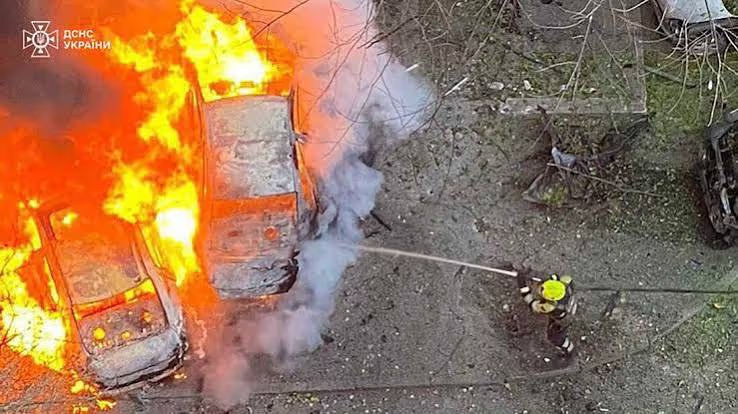
Russia has launched one of its largest combined missile and drone attacks against Ukraine in recent months, striking energy infrastructure across the country and raising fresh concerns about the security of electricity and heating supplies as winter approaches. Ukrainian President Volodymyr Zelenskyy said Russian forces fired approximately 120 missiles and 90 drones during the assault, targeting power generation and transmission facilities in multiple regions. The strikes caused civilian casualties, damaged energy installations and triggered emergency measures to protect the country's already strained electricity network.
The attack represents another major escalation in Russia's sustained campaign against Ukraine's energy system. Since the full-scale invasion began, Moscow has repeatedly targeted power stations, electricity transmission facilities and other infrastructure essential to everyday life. The latest barrage has renewed fears that millions of Ukrainians could face prolonged power disruptions during the coldest months of the year.
Explosions and air-raid warnings were reported across several parts of Ukraine, including Kyiv, Odesa, Lviv and other central, southern and western regions. Ukrainian authorities said air-defence systems intercepted a significant number of incoming threats, although missiles and falling debris still caused damage in several locations.
Key Details of the Russian Attack
- Scale of the assault: Ukrainian President Volodymyr Zelenskyy reported approximately 120 missiles and 90 drones launched by Russia.
- Main targets: Electricity generation facilities, transmission infrastructure and other energy-related installations.
- Air defence: Zelenskyy said Ukrainian forces had intercepted 140 aerial targets.
- Casualties: Multiple civilians were killed and others injured across affected regions. Reported figures varied as authorities continued assessing the damage.
- Energy damage: DTEK, Ukraine's largest private energy company, reported serious damage to its thermal power facilities.
- Power disruptions: Emergency restrictions and electricity supply measures were announced to manage pressure on the national grid.
- International response: Poland scrambled military aircraft as a precaution during the Russian assault near its neighbouring region.
- Winter concerns: The attack intensified fears of electricity and heating shortages as temperatures begin to fall.
Russia Launches a Massive Combined Missile and Drone Assault
Ukrainian officials described the operation as one of the most powerful Russian aerial assaults in recent months. According to President Zelenskyy, Russian forces launched around 120 missiles and 90 drones in a coordinated attack targeting locations throughout Ukraine.
The weapons reportedly included Iranian-designed Shahed-type drones, cruise missiles, ballistic missiles and air-launched ballistic missiles. The combination of different weapons created a complex challenge for Ukrainian air-defence units, which had to respond to threats arriving from different directions and at different speeds.
Zelenskyy said Ukraine's air-defence forces had destroyed or intercepted 140 aerial targets. However, he acknowledged that some missiles and drones reached their intended areas or caused damage through falling debris.
The Ukrainian president said the main objective of the operation was the country's energy infrastructure. Facilities involved in electricity generation and transmission were among the locations affected by the strikes.
The scale of the attack was particularly concerning because Ukraine had been preparing for another major assault on its energy network. Repeated Russian strikes had already weakened the country's electricity system, leaving it vulnerable to further damage during the winter season.
Ukraine's Power Infrastructure Becomes the Main Target
Ukraine's energy system has been one of the most persistent targets of Russian military operations since the beginning of the full-scale invasion. Power plants, substations, transmission lines and other critical installations have repeatedly come under attack.
The latest assault followed the same pattern, with Ukrainian officials reporting strikes against electricity generation and transmission facilities across multiple regions.
Energy Minister German Galushchenko said a massive attack on the country's energy system was underway, with Russian forces targeting electricity generation and transmission infrastructure throughout Ukraine.
The damage is particularly serious because energy infrastructure is interconnected. A strike against a major power facility can affect electricity distribution well beyond the immediate area, forcing operators to redirect supplies and temporarily disconnect parts of the network.
Even when a power station is not completely destroyed, damaged equipment can take considerable time to repair. High-voltage transformers, turbines and other specialised components are difficult to replace quickly, particularly during an ongoing war when supply routes and repair crews face security risks.
The attacks therefore threaten more than the physical buildings and equipment. They place pressure on the entire electricity system, affecting households, hospitals, public services, factories and essential infrastructure.
DTEK Reports Serious Damage to Thermal Power Plants
DTEK, Ukraine's largest private energy company, reported significant damage to its thermal power facilities following the Russian assault.
The company said one of its thermal power plants had suffered serious damage. Thermal power stations are important components of Ukraine's electricity system because they generate power that can be distributed to homes, businesses and public infrastructure.
Damage to these facilities can reduce the amount of electricity available to the national grid, making it more difficult for operators to maintain a stable supply during periods of high demand.
DTEK has repeatedly been affected by Russian attacks on Ukraine's energy infrastructure. The company has previously reported damage to generating facilities and the challenges involved in restoring operations while the country remains under military threat.
Repairing the latest damage will require specialised equipment, engineering teams and time. Even after emergency repairs are completed, some facilities may continue operating below their normal capacity.
Casualties and Damage Reported Across Multiple Regions
The Russian assault also caused civilian casualties and damage to buildings in several parts of Ukraine. Local authorities reported deaths and injuries following missile and drone strikes, with emergency responders deployed to affected locations.
In the Mykolaiv region, President Zelenskyy said a drone attack killed two people and injured six others, including two children. Authorities in the Odesa region also reported fatalities, damage to energy infrastructure and disruptions to electricity and water supplies.
Additional damage was reported in other parts of the country, including the western city of Lviv. Emergency services worked to extinguish fires and respond to incidents involving damaged buildings and infrastructure.
Kyiv was also placed under threat during the assault. Residents were forced to seek shelter as air-raid warnings and explosions were reported in and around the capital. Local officials reported damage to a residential building and an injury after a fire broke out.
Casualty figures differed between reports as information continued to emerge from different regions. The final human cost of the attack remained subject to confirmation by local authorities.
Emergency Power Restrictions Announced Across Ukraine
Following the strikes, Ukraine's energy authorities announced restrictions intended to manage electricity consumption and stabilise the national power system.
The government warned that emergency measures would be introduced across the country's regions as energy operators assessed the damage and worked to restore affected facilities.
Such restrictions can include scheduled or emergency electricity cuts, particularly when the amount of power available is insufficient to meet demand. These measures are designed to prevent uncontrolled failures across the wider grid.
For ordinary households, power restrictions can affect lighting, cooking, heating, communication and access to essential services. Businesses and factories may also be forced to adjust operating hours or rely on backup generators.
The consequences are especially serious for people who depend on electricity for medical equipment, heating systems or other essential needs. Hospitals and emergency services must also prepare for possible disruptions while continuing to provide care.
Why Winter Makes the Attacks More Dangerous
The timing of the assault has increased concerns about Ukraine's ability to maintain reliable electricity and heating supplies during winter.
As temperatures fall, demand for electricity and heating generally rises. Households depend more heavily on energy to keep their homes warm, while hospitals, schools and public facilities require stable supplies to operate safely.
A damaged power network becomes particularly dangerous during this period because repairs may be complicated by freezing conditions, continued military attacks and shortages of specialised equipment.
Ukraine has already experienced repeated power disruptions since Russia began its full-scale invasion. The country has invested significant effort in repairing damaged infrastructure, but every new large-scale assault threatens to reverse some of that progress.
The possibility of prolonged winter blackouts has therefore become a major concern for Ukrainian officials and international partners. The ability to protect remaining energy facilities and quickly repair damaged equipment will be crucial in the coming months.
Air Defence Systems Face Another Major Test
Ukraine's air-defence network has played a central role in protecting cities and critical infrastructure throughout the war. However, the latest attack demonstrates the difficulty of defending a large country against simultaneous waves of missiles and drones.
Different weapons require different interception methods. Slower drones can be tracked and engaged using a range of air-defence systems, while ballistic missiles travel at much higher speeds and may be significantly more difficult to intercept.
Russia's use of multiple weapon types can also place pressure on Ukraine's supply of interceptor missiles and other defensive equipment. Even when a large proportion of incoming threats are destroyed, the remaining weapons can still cause substantial damage.
Ukrainian officials have repeatedly called on Western allies to provide additional air-defence systems and ammunition. Their argument is that protecting energy infrastructure is essential not only for military resilience but also for the survival and wellbeing of civilians.
The latest assault is likely to renew discussions among Ukraine's partners about the urgency of delivering promised defensive equipment and strengthening the country's ability to protect critical infrastructure.
Poland Scrambles Fighter Aircraft as Regional Concerns Grow
The Russian assault also prompted a response from neighbouring Poland, a NATO member that shares a border with western Ukraine.
Poland's armed forces announced that Polish and allied aircraft had been mobilised as a precaution during the large-scale Russian attack. The operation was intended to protect Polish airspace and strengthen security in areas near the border.
Such precautionary measures have become familiar during major Russian aerial attacks against Ukraine. When missiles and drones are launched near NATO territory, neighbouring countries closely monitor the situation to reduce the risk of an accidental airspace violation or wider security incident.
The mobilisation does not mean that Poland had entered the conflict. Rather, it reflects the security concerns created by large-scale military activity close to NATO's eastern border.
The incident highlights how Russia's war against Ukraine continues to affect the wider European security environment, even when attacks are directed at targets inside Ukrainian territory.
The Wider War and the Pressure on Ukraine's Energy Network
The latest assault comes as Russia's full-scale invasion approaches another major milestone and fighting continues across several parts of the front line.
Energy infrastructure has remained a recurring target throughout the conflict. Russian attacks have repeatedly damaged power generation facilities and transmission networks, while Ukraine has attempted to restore supplies and protect essential services.
The strategy has consequences beyond the immediate battlefield. Disrupting electricity can affect industrial production, transport, communications and the daily lives of millions of civilians.
Ukraine's ability to keep its energy system operating is therefore closely connected to its wider resilience. A functioning power network supports military logistics, economic activity and the basic services needed by the civilian population.
The repeated attacks also create a difficult cycle: energy companies repair damaged facilities, only for new strikes to threaten those repairs and force another round of emergency work.
International Leaders Condemn Attacks on Civilian Infrastructure
The assault drew condemnation from international leaders and renewed attention to the protection of civilians during armed conflict.
United Nations Secretary-General António Guterres condemned the Russian strikes. His spokesperson reiterated that international humanitarian law prohibits directing attacks against civilians and civilian objects.
French President Emmanuel Macron also criticised Russian President Vladimir Putin following the attack, arguing that Moscow was not demonstrating a willingness to pursue peace negotiations.
Attacks on energy infrastructure raise serious humanitarian concerns because electricity and heating are essential to civilian life. Damage to power facilities can disrupt hospitals, water systems, public transport and other services relied upon by people who are not participating in hostilities.
The legality of any particular strike depends on the circumstances, including the nature of the target, the expected civilian harm and the precautions taken. However, international humanitarian law requires parties to a conflict to distinguish between military objectives and civilian objects and to protect civilians from the effects of hostilities.
Could the Attack Affect Future Peace Negotiations?
The assault also comes at a politically sensitive moment for Ukraine and its international partners. Donald Trump's upcoming presidency in the United States has raised questions about the future direction of American policy towards the war.
Trump has repeatedly promised to bring the conflict to an end, although the details of his proposed approach have remained unclear. His return to the White House has created uncertainty about the scale and conditions of future US military and financial assistance to Kyiv.
The latest Russian attack could complicate diplomatic efforts by reinforcing concerns in Ukraine and among its allies that Moscow is continuing to use military pressure rather than preparing for a negotiated settlement.
At the same time, the prospect of future negotiations has become an important factor in discussions about military support, territorial questions and security guarantees.
Ukrainian officials have argued that any diplomatic process must be supported by credible security arrangements. They fear that negotiations without sufficient military protection could leave the country vulnerable to further attacks.
Whether the latest assault changes the position of either side remains uncertain. However, it demonstrates that the war continues to carry severe consequences for Ukraine's civilian population and critical infrastructure.
What Happens Next?
Ukraine's immediate priority is to assess the damage, restore electricity supplies and protect the energy network against further attacks. Repair teams and emergency services will be required to work across affected regions while air-defence units remain on alert.
Energy operators will also need to determine how much generating capacity has been lost and whether damaged facilities can return to service quickly. The condition of key substations and transmission lines will be particularly important in determining how widely the disruptions affect the country.
International partners are likely to face renewed pressure to provide air-defence equipment, financial assistance and technical support for repairing energy infrastructure.
Russia's next military decisions will also be closely watched. Further attacks on power generation and transmission facilities could deepen the humanitarian consequences and make it harder for Ukraine to maintain stable electricity supplies through winter.
For Ukrainian civilians, the most immediate concern is whether homes, hospitals and essential services will have reliable power and heating in the weeks ahead.
A Critical Test for Ukraine as Winter Approaches
Russia's massive missile and drone assault has once again exposed the vulnerability of Ukraine's energy infrastructure. With approximately 120 missiles and 90 drones reportedly involved, the operation placed enormous pressure on the country's air defences and damaged facilities that are essential to electricity generation and distribution.
The attack is more than another episode in the ongoing military conflict. It highlights the growing humanitarian risks associated with repeated strikes on infrastructure that millions of civilians depend on for warmth, water, healthcare and everyday life.
Ukraine now faces the difficult task of repairing damaged facilities while preparing for the possibility of further attacks. Its ability to protect the remaining energy network will depend on domestic repair efforts, available air-defence capabilities and continued international support.
As winter approaches, the battle for Ukraine's energy system is becoming increasingly important. The damage caused by this assault may be repaired, but the continuing threat to power generation and civilian infrastructure leaves the country facing another uncertain and potentially difficult winter.