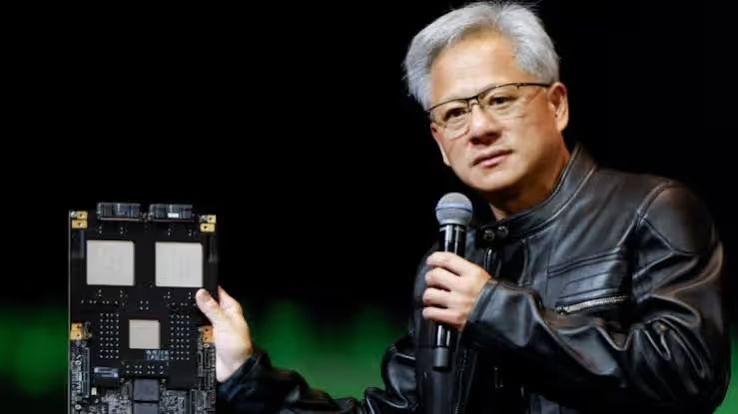
The Silicon Valley Succession Shock: Jensen Huang’s Reported Exit Puts Nvidia’s AI Empire in the Spotlight
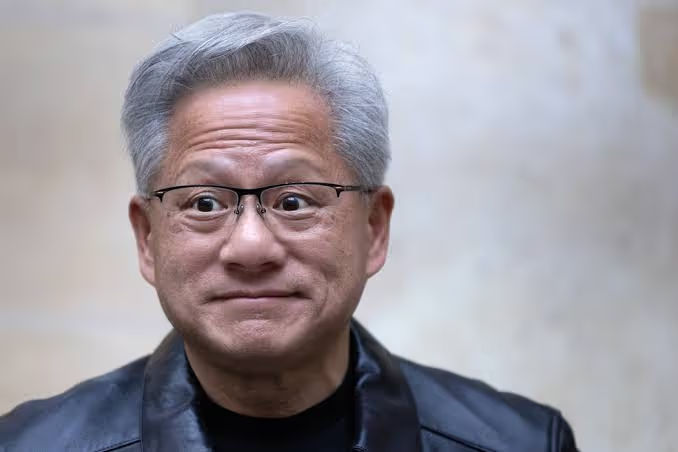
Nvidia has entered an extraordinary new chapter after its co-founder and longtime chief executive, Jensen Huang, resigned from the company with immediate effect. The unexpected departure follows days of intense scrutiny surrounding reports of extramarital relationships and allegations involving a suspected Chinese intelligence connection. In a major leadership change, Nvidia's chief financial officer, Colette Kress, has been appointed interim CEO while the board begins searching for a permanent successor. The decision marks one of the most significant leadership transitions in the artificial intelligence industry, raising questions about corporate governance, national security and the future of the company at the centre of the global AI boom.
Huang's departure is particularly significant because Nvidia is not an ordinary technology company. Its graphics processing units and specialised computing platforms have become essential infrastructure for organisations developing advanced artificial intelligence systems. From major cloud providers to leading AI developers, a large part of the industry's expansion has depended on Nvidia's hardware and software ecosystem.
The company's announcement did not provide a reason for Huang's resignation. However, the decision came after several days of reports about his personal relationships, questions surrounding a woman alleged to have links to Chinese intelligence, and growing attention from US political and security institutions.
Key Details of Nvidia's Leadership Shake-Up
- Former CEO: Jensen Huang, Nvidia's co-founder and longtime chief executive.
- Resignation: Huang stepped down as president, CEO and board member, effective immediately.
- Interim CEO: Colette Kress, Nvidia's executive vice president and chief financial officer.
- Board leadership: Harvey C. Jones was appointed Nvidia's first-ever board chair.
- Company response: Nvidia said it would begin searching for a permanent CEO and consider internal and external candidates.
- Controversy: Reports concerning alleged extramarital relationships and a suspected foreign intelligence connection intensified scrutiny of Huang.
- National security: The allegations raised questions about sensitive technology, business relationships and US restrictions on advanced AI chip exports to China.
- Important distinction: The allegations do not establish that Huang knowingly assisted a foreign government or that Nvidia's confidential information was compromised.
Jensen Huang Steps Down After 33 Years at Nvidia
Nvidia announced the leadership transition on November 12, confirming that Huang had resigned from his positions as president, chief executive officer and member of the board of directors. His departure took effect immediately.
The announcement brought an end to Huang's 33-year tenure as the company's chief executive. He co-founded Nvidia in 1993 and played a central role in transforming it from a graphics-chip manufacturer into one of the most influential companies in modern computing.
Nvidia's official statement did not directly refer to the allegations or controversy surrounding Huang. Instead, the board acknowledged his contribution to the company's development, describing his impact as profound and thanking him for his work in the technology industry.
The company also emphasised that its operations, customer commitments and product roadmap were expected to continue without interruption during the transition. The board said it had confidence in the existing leadership team and would begin searching for a permanent CEO.
The timing of the announcement nevertheless attracted considerable attention. It followed a period of intense media reporting, an independent investigation initiated by Nvidia's board and growing questions about the potential consequences of the allegations.
What Led to the Controversy Surrounding Huang?
Reports about Huang's personal relationships became a major corporate issue after media organisations published allegations involving individuals connected to his professional and business circles.
One of the central figures in the reporting was Alice Huang, a businesswoman associated with Megaspeed, a Singapore-based technology and data-centre company. Reports alleged that she had connections to Chinese intelligence. Those claims raised questions because Nvidia's advanced computing chips are strategically important technology, particularly amid restrictions on exports to China.
The controversy intensified after reports described a personal relationship between Jensen Huang and Alice Huang. Nvidia's board launched an investigation into claims that the CEO may have been targeted by a foreign intelligence effort.
Huang publicly acknowledged being unfaithful to his wife and apologised to his family and Nvidia employees. He also denied knowing that Alice Huang was allegedly connected to Chinese intelligence.
A separate report by The New York Times described an alleged relationship between Huang and Kimberly Powell, an Nvidia vice-president who reportedly worked in the company's healthcare business and reported directly to him. The report added another layer to concerns about executive conduct and potential conflicts of interest.
Reuters subsequently reported another alleged relationship involving a different Nvidia employee, citing people familiar with the matter. The individual was not publicly identified in that report.
These reports placed the company's leadership under growing pressure. The board had initially expressed confidence in Huang while an investigation was underway, but the situation developed rapidly before his resignation was announced.
Why the Allegations Raised National Security Questions
The controversy became more serious because of Nvidia's position in the global semiconductor industry. The company designs some of the world's most advanced AI accelerators, which are used to train and operate powerful artificial intelligence models.
These chips are also strategically important to governments. The United States has introduced restrictions on the export of advanced computing technology to China, arguing that certain chips could strengthen China's military, intelligence and advanced technology capabilities.
Huang had previously argued against broad restrictions on Nvidia's ability to sell products in China. He maintained that allowing American companies to compete in international markets was important for the United States to retain its position in the global technology industry.
Against this background, reports about a personal relationship involving a businesswoman alleged to have intelligence connections created difficult questions for the company and policymakers.
The central concern was not simply Huang's private life. It was whether relationships involving senior executives could create vulnerabilities around sensitive commercial information, technology access or business decisions.
However, it is important to separate questions raised by the allegations from established findings. Al Jazeera reported that there was no established evidence Huang knowingly assisted Beijing or that company secrets had been compromised. Nvidia's board also said it had no reason to believe national security had been compromised.
Congressional Attention Adds to the Pressure
The controversy also attracted attention in Washington, where lawmakers have been debating the risks associated with exporting advanced AI chips to China.
Huang agreed to testify before the US Congress, according to statements reported by Al Jazeera. His potential testimony became an important part of the wider discussion because Nvidia occupies a central position in the technology competition between the United States and China.
The situation also developed as lawmakers examined the broader implications of AI chip exports and the safeguards intended to prevent advanced computing technology from reaching restricted users.
The questions facing policymakers extend beyond one executive. They involve how technology companies manage sensitive partnerships, how export restrictions are enforced and how national security concerns should be balanced against commercial competition.
Huang's resignation does not, by itself, resolve those questions. Investigations and policy discussions surrounding the semiconductor industry can continue independently of a change in corporate leadership.
Who Is Colette Kress, Nvidia's New Interim CEO?
With Huang's departure, Nvidia has placed Colette Kress in charge of its day-to-day executive leadership. Kress previously served as the company's executive vice-president and chief financial officer, a position she had held since September 2013.
Her appointment gives Nvidia an interim leader with more than a decade of experience inside the organisation and a detailed understanding of its financial operations, business relationships and long-term growth strategy.
Before joining Nvidia, Kress held senior finance positions at major technology companies, including Texas Instruments, Microsoft and Cisco. She also spent nearly 25 years working in finance roles across the technology sector.
Kress studied finance at the University of Arizona and earned an MBA from Southern Methodist University. Her professional background has focused on corporate finance, financial planning and the management of large technology businesses.
Nvidia's board said Kress had played an important role in the company's expansion and understood its customers, operations and financial position. The board expressed confidence in her ability to lead the business during the transition.
Kress said she intended to build on the foundation established during Huang's leadership and continue advancing Nvidia's work in accelerated computing and artificial intelligence.
Why Kress's Appointment Matters
Nvidia's decision to appoint its existing CFO as interim CEO offers a degree of continuity at a time when investors, customers and technology partners are seeking reassurance.
The company operates across a complex network of chip manufacturing partners, cloud providers, software developers, research institutions and major technology customers. A sudden change at the top could create uncertainty if it led to delays in product development, supply agreements or strategic decisions.
Kress already understands the financial structure behind Nvidia's operations. Her experience includes overseeing the company's finances during a period of extraordinary growth, making her a familiar figure to investors and senior employees.
However, the interim appointment does not automatically mean she will become the permanent chief executive. Nvidia's board has said it will consider both internal and external candidates as part of its succession process.
The next stage will be determining whether the company wants a leader with a financial background, a technology-focused executive or someone with experience managing a global semiconductor business.
Harvey C. Jones Becomes Nvidia's First-Ever Board Chair
The leadership changes also include the appointment of Harvey C. Jones as Nvidia's first-ever chair of the board.
Jones is an entrepreneur, technology executive and venture investor with more than three decades of experience. He previously served as chief executive and executive chairman of Synopsys, a company known for its semiconductor design software and engineering tools.
His appointment creates a new formal board leadership role at a company that had been closely associated with Huang's executive influence for decades.
The separation of board leadership and day-to-day executive management may also become important as Nvidia works through its succession process and responds to questions about corporate oversight.
The board will now have to oversee the search for a permanent CEO while maintaining investor confidence and ensuring that the company's strategic priorities remain on track.
Market Reaction: Nvidia Shares Face Fresh Pressure
Huang's resignation immediately became a major concern for financial markets because investors have long viewed him as one of Nvidia's most important strategic assets.
Nvidia's share price experienced significant volatility during the controversy. The Guardian reported that the stock fell sharply when trading opened after the resignation announcement before recovering part of its losses. It ultimately closed down 4.3% on the day.
The same report estimated that the decline removed more than $180 billion from Nvidia's market value in a single trading session, with losses over the wider week reaching approximately $490 billion.
The company's valuation also came under pressure as investors considered the implications of losing the executive most closely associated with its rise during the AI boom.
These market movements reflect uncertainty rather than a definitive judgement about Nvidia's future performance. Stock prices can respond to leadership changes, broader technology-sector trends, investor sentiment and expectations about future earnings.
Why Jensen Huang Was So Important to Nvidia
Huang's influence on Nvidia extended far beyond his role as chief executive. He was one of the company's founders, its most recognisable public representative and a central figure in shaping its long-term technology strategy.
When Nvidia was established in 1993, its original focus was graphics processing technology. Over time, the company expanded into gaming, professional visualisation, data centres, accelerated computing and artificial intelligence.
One of its most important strategic developments was the expansion of GPU computing beyond traditional graphics applications. Nvidia's hardware became increasingly useful for parallel processing, scientific research and the training of machine-learning systems.
The company's CUDA software platform also helped create a developer ecosystem around its GPUs. This combination of hardware, software and developer tools became a major competitive advantage as demand for AI computing increased.
Under Huang's leadership, Nvidia became one of the most important suppliers to the companies building large-scale AI infrastructure. Its products are used in data centres that support advanced language models, image generation systems, scientific applications and enterprise AI services.
His departure therefore represents more than a change in management. It marks the end of an era for a company whose identity and strategic direction were strongly associated with its founder.
Could Nvidia Continue Growing Without Its Co-Founder?
One of the biggest questions facing investors is whether Nvidia can maintain its momentum without Huang at the top.
The company has several advantages that extend beyond the influence of one executive. It has established relationships with major technology customers, a broad portfolio of computing products, a large software ecosystem and an experienced management team.
Its position in AI infrastructure has also been built through years of research, engineering investment and partnerships. Those capabilities do not disappear simply because the chief executive changes.
However, Huang's technical knowledge and involvement in product strategy were widely viewed as distinctive strengths. Replacing that level of experience may be difficult, particularly in a market where product development, supply capacity and customer demand are changing rapidly.
Analysts cited in media coverage offered differing views. Some argued that Nvidia remained well positioned because of its products and existing business pipeline. Others warned that finding a successor capable of matching Huang's technical understanding and leadership would be a major challenge.
The company's ability to retain senior engineers, maintain customer relationships and execute its product roadmap will be important indicators of how smoothly the transition proceeds.
The Wider Impact on the Global AI Industry
Nvidia's leadership transition matters because the company occupies a central position in the global AI ecosystem. Its processors are used by cloud computing providers, AI laboratories, technology companies and research institutions around the world.
A prolonged period of uncertainty could influence how customers assess their dependence on Nvidia's hardware and whether they should accelerate efforts to diversify their computing infrastructure.
Competitors such as AMD and other semiconductor companies may attempt to use the leadership change as an opportunity to attract customers or strengthen their positions in the AI accelerator market.
At the same time, Nvidia's existing software ecosystem and established customer relationships create significant barriers for competitors. Organisations that have invested heavily in Nvidia-based infrastructure may not be able to switch suppliers quickly or easily.
The situation could also renew discussions about the concentration of power in the AI supply chain. When one company becomes a major supplier of essential computing infrastructure, changes to its leadership can have consequences that reach far beyond its shareholders.
What Happens to Nvidia's AI Roadmap?
Nvidia's board has said that the company's operations, customer commitments and product roadmap are expected to continue without interruption.
This reassurance is important because the company is competing in a rapidly changing market. AI developers are demanding more powerful processors, larger data-centre systems and increasingly efficient ways to train and operate advanced models.
Nvidia's future performance will depend on its ability to continue delivering new generations of chips, improve computing efficiency and maintain the software tools that encourage developers to build on its platforms.
The company must also navigate manufacturing constraints, global supply-chain pressures, competition and government restrictions affecting international technology sales.
A leadership transition does not necessarily mean these plans will change. However, customers and investors will be watching closely to see whether Kress and the wider management team maintain the same pace of execution.
What Happens Next?
Nvidia's immediate priority is to maintain operational stability while the board searches for a permanent chief executive. The company has confirmed that both internal and external candidates will be considered.
Kress will continue serving as interim CEO and CFO until a permanent successor is appointed. Her first major challenge will be maintaining confidence among employees, customers, shareholders and business partners during a period of intense public scrutiny.
The company will also need to address questions about governance, executive oversight and the safeguards used to protect sensitive business information. The allegations surrounding Huang have highlighted the importance of separating personal conduct issues from the responsibilities of executives leading strategically important technology companies.
Meanwhile, the wider national security debate surrounding advanced AI chips and exports to China is likely to remain an important issue for Nvidia and the semiconductor industry.
Investors will be watching the company's financial performance, product announcements and management decisions for signs that the transition is not affecting its long-term strategy.
A Defining Moment for Nvidia's Future
Jensen Huang's resignation marks an extraordinary turning point for a company that has become one of the most influential forces in modern technology. For more than three decades, he helped guide Nvidia through major shifts in computing, from graphics processing to the infrastructure powering artificial intelligence.
His departure comes at a time when the company is more strategically important than ever. The global AI industry depends heavily on advanced chips, and Nvidia remains one of the most important suppliers in that market.
Colette Kress now faces the responsibility of leading the company through an unexpected transition while protecting its technology roadmap, business relationships and market position. Her appointment provides continuity, but the search for a permanent successor will be one of the most closely watched corporate decisions in the technology sector.
The controversy also highlights a wider reality: the leaders of major technology companies are responsible for more than financial performance. Their decisions, relationships and governance standards can carry consequences for employees, investors, customers and even national security.
Nvidia's next chapter will test whether the AI giant can move beyond the influence of its most recognisable founder. The technology, customers and infrastructure remain in place, but the company must now prove that its future does not depend on a single individual.