Beyond the Welcome: Pope Leo’s Argentine Homecoming Puts Milei’s Austerity Agenda Under the Spotlight
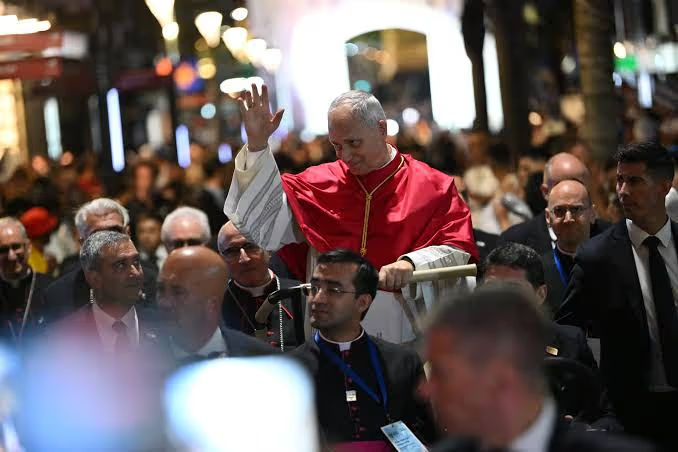
The visit marks an important moment for Argentina, a country with deep Catholic traditions and a particularly strong connection to the papacy through the late Pope Francis, who was born in Buenos Aires. Although Francis never returned to his homeland as pope, his successor has now arrived to meet its people and address the country's political and social challenges.
Leo's opening remarks have already attracted attention for their emphasis on public service and the responsibility of leaders to improve the lives of all citizens. Without directly attacking Milei's economic programme, the pontiff highlighted the importance of ensuring that economic growth benefits disadvantaged communities rather than leaving vulnerable people behind.
Key Details of Pope Leo's Argentina Visit
- Visiting pontiff: Pope Leo XIV, the first US-born pope.
- Host: Argentine President Javier Milei.
- Arrival: Jorge Newbery International Airport in Buenos Aires.
- Historical significance: First papal visit to Argentina since Pope John Paul II travelled there in 1987.
- Tour: Part of a 12-day journey covering Uruguay, Argentina and Peru.
- Main themes: Democracy, poverty, employment, education, social responsibility and economic development.
- Political backdrop: Tensions between the government and sections of the Catholic Church over austerity measures.
- Upcoming activities: Meetings with public officials, visits to communities and a prison, and religious services.
A Historic Papal Arrival in Buenos Aires
Pope Leo XIV arrived at Jorge Newbery International Airport in Buenos Aires after completing the Uruguay stage of his South American journey. President Javier Milei personally welcomed him at the aircraft, accompanied by his sister and presidential secretary, Karina Milei.
The official reception included military honours, the national anthems of Argentina and the Holy See, and a floral presentation by two children. Church representatives and government officials also participated in the welcoming ceremony.
According to Vatican News, the papal aircraft travelled approximately 365 kilometres from Montevideo to Buenos Aires, completing the journey in around one hour. The arrival marked the beginning of the Argentine stage of Leo's wider apostolic journey through South America.
Crowds gathered along the pope's route through the capital, with supporters waving Argentine and Vatican flags. For many Catholics, the occasion represented a significant moment after decades without a papal visit to the country.
Argentina last received a sitting pope when John Paul II visited in 1987. The absence of a visit during Francis's papacy was particularly notable because Francis was born in Buenos Aires and served as archbishop of the city before becoming head of the Catholic Church.
First Visit Since Pope Francis: A Special Connection With Argentina
The visit carries an emotional significance that extends beyond its diplomatic and religious importance. Pope Francis, born Jorge Mario Bergoglio in Buenos Aires, became the first pope from the Americas when he was elected in 2013.
Despite his strong personal connection to Argentina, Francis never returned to the country during his time as pontiff. His successor's arrival therefore represents an opportunity for the Catholic Church to reconnect with a nation closely associated with the previous pope's life and religious journey.
Leo acknowledged this connection in his address, reflecting on the country's history and the generations of people who helped shape its national identity. He described his arrival as personally meaningful because of the relationship between Argentina and his predecessor.
The legacy of Francis also has political significance. During Milei's rise to power, the president had a highly contentious relationship with the late pope, publicly criticising his positions on social justice, taxation and government programmes.
Milei's tone towards Francis later changed. During his welcome, the Argentine president spoke positively about his predecessor, describing him as an inspiring and generous figure and recognising his importance to Argentina.
Leo Delivers a Message About the Limits of Political Power
One of the most closely watched moments of the visit came during Leo's address to Argentine authorities, civil society representatives and diplomats. Speaking in the presence of Milei, the pope stressed that political authority must be exercised as a form of service rather than as a means of personal or institutional dominance.
He urged leaders to recognise the limits of their power and direct their decisions towards the wellbeing of the entire community.
The message was especially significant given the political environment surrounding Milei's administration. The president has pursued major reductions in public spending, arguing that strict fiscal discipline is necessary to stabilise Argentina's economy and control inflation.
Although Leo did not directly condemn the government's economic strategy, his emphasis on social responsibility reflected concerns repeatedly raised by Church leaders about the impact of spending cuts on vulnerable households.
The pope also described democracy as part of Argentina's national heritage that must be protected. He argued that democratic institutions are strengthened when citizens respect differences of opinion, trust the rule of law and recognise that people with opposing views still share a common future.
The Catholic Church's Concerns Over Milei's Austerity Policies
The pope's visit comes amid disagreements between Argentina's Catholic Church and Milei's government over the consequences of its economic reforms.
Since taking office, Milei has pursued an aggressive programme of public spending reductions, subsidy cuts, deregulation and plans to privatise state-owned companies. His administration argues that these policies are necessary to address Argentina's long-running economic problems, reduce inflation and restore financial stability.
The government has reported significant progress in reducing inflation and achieving a budget surplus. However, the reforms have also brought considerable social and economic pressure, including reductions in public support programmes, public-sector job losses and difficulties for businesses and households.
Sections of the Catholic Church have criticised the effects of austerity on poorer communities. Some clergy members have also taken part in protests against policies they believe place too much pressure on people already struggling with living costs.
The central disagreement is not simply about whether Argentina needs economic reform. It concerns how the costs of that reform should be distributed and whether economic improvements are reaching the people most affected by the country's financial difficulties.
Leo's message reflected this concern, calling for economic growth that creates opportunities and also benefits people facing unemployment, financial insecurity and difficulty meeting household expenses.
"The Economy Must Serve the Person"
One of the clearest themes in the pope's opening message was the relationship between economic policy and human welfare. Leo emphasised that economic activity should ultimately serve people rather than expecting people to exist solely for the benefit of the economy.
He encouraged policies that stimulate private initiative and create employment opportunities, while also ensuring that economic growth improves the lives of disadvantaged communities.
The pontiff specifically highlighted unemployed people, retirees and families who continue to struggle financially despite working hard. His remarks suggested that economic progress should be measured not only through government budgets and financial indicators but also through the conditions experienced by ordinary citizens.
This position does not reject private enterprise or economic development. Instead, it calls for a balance between encouraging investment and protecting people who may be left behind during periods of economic restructuring.
The message is particularly relevant in Argentina, where years of inflation and financial instability have made economic recovery a major priority. The challenge facing the country is to achieve lasting stability without allowing the burden of reform to fall disproportionately on vulnerable households.
Education and Young People Take Centre Stage
Leo also devoted significant attention to the future of Argentina's younger generation. He argued that the opportunities available to young people will play a major role in determining whether they can build successful lives in their own country.
The pope raised concerns about young Argentines who feel compelled to leave their homeland to pursue better opportunities elsewhere. He said a nation should seriously examine its shortcomings when young people cannot see a future for themselves at home.
He called for stronger support for education, vocational training, universities and scientific research. According to the pope, investment in these areas helps young people develop their abilities and contribute to the country's long-term development.
His remarks are particularly relevant amid disputes over government spending on public universities and education. Milei's austerity programme has affected public institutions, with universities becoming one of the major areas of disagreement between the government and its critics.
Leo's message was that a country's future depends not only on controlling public finances but also on creating opportunities for the next generation to participate in its economic and social life.
Technology, Artificial Intelligence and Ethical Responsibility
The pope also addressed the rapid development of technology, particularly artificial intelligence. He acknowledged that new technologies are creating opportunities in fields such as medicine, education, manufacturing and scientific research.
However, he warned that technological progress must be accompanied by ethical responsibility. The decisions made by governments, businesses and technology developers can have far-reaching consequences for workers, communities and society.
His comments carry particular relevance in Argentina, where Milei has expressed ambitions to attract investment in artificial intelligence and establish the country as an important destination for data centres.
Leo's position was not that technological advancement should be stopped. Rather, he called for careful consideration of how new technologies are developed and used, ensuring that innovation remains connected to human dignity and the common good.
Argentina's Political and Social Challenges
Beyond economic policy, Leo's address covered a broader range of issues affecting Argentina's national development. He highlighted the importance of strong institutions, cooperation between governments and the fight against organised crime and corruption.
The pope warned that criminal networks involved in human trafficking, arms and drug trafficking undermine social stability, contribute to violence and divert resources that should serve the public.
He called for cooperation between countries and stronger institutions capable of protecting citizens and maintaining public trust. Corruption, he argued, damages confidence in government and weakens the ability of institutions to serve the common good.
He also addressed environmental responsibility, urging Argentina to use its natural resources in ways that benefit communities while protecting ecosystems and the conditions necessary for future generations.
These issues reflect the broader message of the visit: economic development, democratic stability, public integrity and social responsibility must work together if Argentina is to build a sustainable future.
A Visit Focused on Vulnerable Communities
The pope's programme in Argentina is expected to include meetings and activities that highlight communities often overlooked in public discussions. His itinerary includes a visit to a care centre for people with disabilities and a prison, alongside religious services and meetings with public officials.
These visits reflect a recurring theme in Leo's public ministry: the importance of recognising the dignity of people who experience poverty, exclusion, illness or other forms of vulnerability.
The Vatican has described the wider South American journey as a significant pastoral undertaking, with millions of people expected to participate in events across the countries on the itinerary.
Argentine officials have estimated that around seven million people could see the pope during his time in the country. His programme includes activities in Buenos Aires, Luján and Córdoba before he continues his journey to Peru.
A Changing Religious Landscape in Argentina
The visit also takes place against the background of changing religious identification across Latin America. Although Catholicism remains the region's largest religious tradition, the proportion of people identifying as Catholic has declined in several countries.
A Pew Research Center survey cited in reporting on the visit found that the share of people in Argentina identifying as Catholic fell from 71% in 2013–2014 to 58% approximately a decade later.
The shift highlights a challenge facing the Catholic Church as it seeks to maintain its influence and connection with younger generations. Political disagreements, changing social attitudes and the growth of other religious identities are all part of a broader transformation in the region's religious landscape.
Leo's visit therefore carries significance beyond the relationship between the Vatican and the Argentine government. It is also an opportunity for the Church to strengthen its connection with communities in a country that played a major role in the life of Pope Francis.
What Happens Next?
The Argentine stage of the pope's South American journey will continue with meetings involving public officials, religious communities and representatives of civil society. His itinerary also includes visits to vulnerable communities and celebrations of Mass in several locations.
He is expected to remain in Argentina until Wednesday before travelling to Peru, the final country on his 12-day journey through South America.
Attention will remain focused on whether his remarks influence the wider national debate about austerity, social protection and the responsibilities of political leadership. Although the pope has not directly challenged Milei's entire economic programme, his emphasis on poverty, education and the welfare of citizens gives the visit clear social and political importance.
For Milei, the visit offers an opportunity to welcome a major international religious figure and present Argentina as a country moving towards economic stability. For the Vatican, it provides a platform to reinforce the Church's position on human dignity, democratic institutions and the responsibility of governments to serve their populations.
The historic welcome may have been marked by ceremony and national pride, but the deeper significance of the visit lies in the questions it has placed before Argentina's leadership: who benefits from economic recovery, how should political power be exercised, and what kind of future is being built for the country's next generation?
Keywords:
Related Posts