A Final Flash Over Sumatra: NASA’s Swift Telescope Ends 22 Years of Watching the Universe
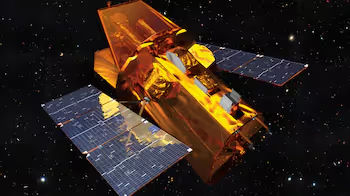
After nearly 22 years spent observing some of the most powerful explosions in the universe, NASA's Neil Gehrels Swift Observatory has completed its final journey. The 3,200-pound spacecraft re-entered Earth's atmosphere over northern Sumatra, Indonesia, where most of it was expected to burn up. Its return marks the end of a remarkable scientific mission that transformed how astronomers detect and study gamma-ray bursts, exploding stars and other energetic events across the cosmos.
The re-entry was confirmed by the United States Space Force, which tracked the satellite as it descended from orbit on Wednesday morning. NASA said the spacecraft entered the atmosphere at approximately 7:39 a.m. Eastern Standard Time, travelling over the North Sumatra region of Indonesia.
The event came less than three months after a costly rescue attempt failed to raise the observatory into a higher orbit. Although its operational life had already exceeded its original design expectations by almost two decades, the satellite's final descent brought an extraordinary chapter in space-based astronomy to a close.
Swift Observatory: Key Facts
- Official name: Neil Gehrels Swift Observatory
- Launch year: 2004
- Time in orbit: Nearly 22 years
- Weight: Approximately 3,200 pounds (1,452 kilograms)
- Re-entry location: North Sumatra, Indonesia
- Re-entry time: 7:39 a.m. EST
- Primary scientific target: Gamma-ray bursts and other powerful cosmic events
- Rescue mission cost: Approximately $30 million
- Estimated risk of harm from debris: One chance in 2,100, according to the U.S. Space Force assessment
A Fiery Return Over Northern Sumatra
NASA confirmed that Swift re-entered Earth's atmosphere over the North Sumatra region of Indonesia at approximately 7:39 a.m. EST. The spacecraft was travelling at around 22 times the speed of sound as it entered the upper atmosphere.
During atmospheric re-entry, friction and intense heating place enormous stress on a spacecraft. NASA expected most of Swift to disintegrate and burn up before reaching the surface. However, the agency acknowledged that some components could potentially survive the descent.
The spacecraft weighed approximately 3,200 pounds, making its uncontrolled return a closely monitored event. The U.S. Space Force had estimated the probability of someone on Earth being harmed by surviving debris at approximately one in 2,100.
No damage or injuries on the ground were reported in the initial accounts of the re-entry. The exact fate of any surviving fragments was not immediately established.
What Was NASA's Swift Observatory Designed to Discover?
Launched in November 2004, the Neil Gehrels Swift Observatory was developed to investigate gamma-ray bursts, among the most energetic explosions known in the universe.
Gamma-ray bursts are brief but extraordinarily powerful releases of energy. They can occur when massive stars collapse or when compact objects such as neutron stars merge. Although these events may last only seconds or minutes, they can release enormous amounts of energy and provide scientists with valuable information about the life cycles of stars and the evolution of galaxies.
Swift was designed to identify these events quickly and redirect its instruments towards their locations. Its ability to respond rapidly allowed astronomers around the world to observe cosmic explosions while their signals were still detectable.
The observatory used three primary scientific instruments:
- Burst Alert Telescope: Detected gamma-ray bursts and helped determine their locations in the sky.
- X-Ray Telescope: Examined X-ray emissions from cosmic events, helping scientists study what happened after an initial burst.
- Ultraviolet/Optical Telescope: Observed ultraviolet and visible light, allowing researchers to investigate the afterglows of energetic events.
Together, these instruments gave researchers a more complete picture of rapidly changing astronomical phenomena. Swift's observations helped scientists connect the initial bursts of gamma rays with the X-ray, ultraviolet and optical signals that followed.
A Two-Year Mission That Lasted Almost 22 Years
When Swift launched in 2004, its primary mission was designed to last approximately two years. Instead, the spacecraft continued delivering scientific observations for almost 22 years, far exceeding its original operational expectations.
During its extended mission, Swift detected more than 2,000 gamma-ray bursts and studied a wide range of other astronomical objects and events. Its observations included supernova explosions, black holes disrupting nearby stars, X-ray flares from stars, active galaxies, asteroids and comets.
The mission also made it possible for other observatories to respond to short-lived cosmic events. By rapidly identifying and reporting gamma-ray bursts, Swift helped ground-based and space-based telescopes coordinate follow-up observations.
NASA has credited Swift's scientific work with contributing to approximately 7,000 published research papers. Its data will remain valuable even after the spacecraft itself has disappeared, allowing researchers to continue analysing observations collected over more than two decades.
Why Did the Satellite Fall Back to Earth?
Swift's return was the result of a gradual loss of orbital altitude. The observatory operated in low Earth orbit and did not have its own propulsion system to independently raise its altitude when atmospheric drag began affecting its trajectory.
Increased solar activity contributed to the problem. When the Sun becomes more active, the upper layers of Earth's atmosphere can expand. This increases atmospheric drag on satellites travelling through low Earth orbit, gradually slowing them and causing their orbits to decay.
Swift had already exceeded its original mission lifetime by a considerable margin. However, the changing orbital conditions accelerated its descent, leaving NASA with a limited window to attempt a rescue.
NASA eventually ended the observatory's scientific operations on October 20 as its orbital conditions continued to deteriorate.
The $30 Million Rescue Mission That Failed
Before accepting the satellite's eventual return, NASA attempted to extend its life through a dedicated rescue mission developed with Katalyst Space Technologies, an Arizona-based space company.
The plan involved launching a specially designed robotic spacecraft called LINK. Its task was to approach Swift, establish a connection with the observatory and push it into a higher, more stable orbit.
NASA committed approximately $30 million to the effort, which was intended to give the ageing observatory additional time in space and potentially extend its scientific usefulness.
However, the rescue spacecraft encountered serious problems after reaching orbit. LINK began spinning uncontrollably and experienced difficulties maintaining the correct orientation and positioning needed for the planned operation.
Despite efforts to stabilise the rescue vehicle, mission managers eventually abandoned the attempt. By August, the teams had concluded that LINK could not safely capture Swift and raise it into a higher orbit.
With the rescue effort cancelled and no propulsion system available aboard Swift, the observatory continued its descent until it finally re-entered Earth's atmosphere.
Could Falling Space Debris Have Harmed People?
The return of a spacecraft weighing more than a tonne naturally raised concerns about the possibility of debris reaching populated areas. NASA expected the majority of Swift to burn up during re-entry, but some denser components could potentially survive the extreme temperatures.
The U.S. Space Force had assessed the chance of debris harming someone on Earth at approximately one in 2,100. This represented a low estimated risk, but it was not zero.
The re-entry was monitored by space-tracking authorities, with NASA and other organisations following the spacecraft's final descent. Initial reports did not indicate injuries or damage caused by falling debris.
The incident also highlights a wider challenge facing the space industry: managing ageing satellites and other objects that eventually return to Earth's atmosphere. As the number of spacecraft in orbit increases, safe disposal and re-entry planning are becoming increasingly important.
What Swift's Final Mission Means for Astronomy
Swift's departure leaves a significant scientific legacy. Its rapid detection and observation of gamma-ray bursts helped researchers understand how some of the universe's most energetic events unfold.
The observatory was particularly valuable because it could quickly move its instruments towards newly detected events. This allowed scientists to study cosmic explosions during their earliest stages, when important details about their origins and behaviour could still be observed.
Its extensive archive of observations will continue to support research long after the satellite's final re-entry. Scientists can revisit the data to investigate questions about stellar explosions, black holes, distant galaxies and the environments in which gamma-ray bursts occur.
The end of Swift's operations does not mean that research into gamma-ray bursts will stop. Other space observatories and ground-based facilities continue to study high-energy events, although replacing Swift's particular combination of instruments and rapid response capabilities remains an important scientific challenge.
The Growing Challenge of Ageing Satellites
Swift's final descent also draws attention to an issue that extends beyond one NASA mission. Thousands of satellites and pieces of space infrastructure operate around Earth, and every spacecraft eventually reaches a point when it can no longer perform its intended function.
Some satellites are designed with propulsion systems that allow them to move into safer disposal orbits. Others rely on atmospheric drag to gradually bring them back towards Earth. When a spacecraft has no ability to manoeuvre, however, its final trajectory can become increasingly difficult to control.
The failed attempt to rescue Swift demonstrates the technical and financial challenges involved in extending the life of ageing spacecraft. It also reinforces the importance of designing future satellites with reliable end-of-life plans.
What Happens After Swift?
Although the Neil Gehrels Swift Observatory has completed its journey, its scientific contribution is far from over. The observations it collected over nearly 22 years will remain accessible to researchers and continue to support new discoveries.
Its story is also a reminder of how much can be achieved by a spacecraft operating far beyond its original design lifetime. What began as a mission expected to last only two years became one of the most productive observatories for studying high-energy cosmic events.
The satellite's final passage over Indonesia marks the end of its physical presence in orbit, but not the end of its scientific influence. The data it leaves behind will continue helping astronomers explore some of the universe's most violent and mysterious phenomena.
Swift may have made its final journey through Earth's atmosphere, but the discoveries it enabled will continue to illuminate the universe for years to come.