France’s October 17 Protest Wave: How School Anger and Living Costs Converged With Yellow Vest Unrest
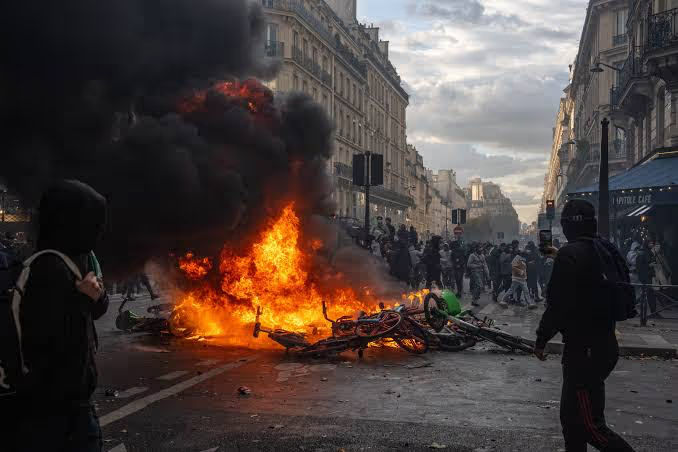
Hundreds of thousands of people took to the streets across France on October 17, 2026, in demonstrations driven by rising living costs, concerns about public services and deteriorating conditions in schools. What began as a day of marches and collective demands was accompanied by clashes with police, fires, vandalism and looting in several cities. The events brought together student protesters, trade union members, veterans of the Yellow Vest movement and other demonstrators, exposing the range of grievances now shaping France's street protests.
Key facts at a glance
- Date: Saturday, October 17, 2026.
- Locations: Paris, Lyon, Marseille, Bordeaux, Limoges and other French cities.
- Attendance: Interior Minister Laurent Nuñez estimated 550,000 participants nationwide; organizers put the figure at approximately 800,000.
- Main concerns: Rising prices, school conditions, wages, pensions and public services.
- Violence: Some groups clashed with police, looted shops and damaged public buildings, while many other demonstrators marched peacefully.
- Arrests: Initial and later reports gave different totals as authorities updated their figures.
- Political context: The protests revived comparisons with France's 2018 Yellow Vest movement.
What happened during the October 17 protests?
France experienced a major nationwide protest day on October 17, with demonstrations in Paris and numerous other cities. The marches brought together people with different backgrounds and concerns, including high school and university students, workers, trade union activists and participants associated with the Yellow Vest movement.
The gatherings were intended to connect separate campaigns around a broader message about living standards and public services. Participants raised concerns about the cost of food, energy and fuel, as well as school staffing, classroom conditions, wages and pensions.
Most demonstrators did not take part in violence. However, separate groups clashed with law enforcement, threw projectiles, set fires and targeted shops and public buildings. In parts of Paris, police used tear gas and water cannons as confrontations intensified.
The Associated Press reported disturbances in Paris, Lyon, Marseille, Bordeaux and Limoges, among other locations. The incidents included looting, fires and damage to government and commercial properties.
Why were people protesting?
Rising living costs and economic pressure
The cost of living was one of the central issues behind the demonstrations. Protesters expressed frustration over the price of everyday essentials, including food, energy and fuel, and argued that household budgets were under growing pressure.
The economic concerns echoed those associated with the Yellow Vest movement, which began in 2018 and became a major challenge for President Emmanuel Macron's government. That earlier movement was initially associated with fuel prices and taxation before expanding into wider complaints about inequality, purchasing power and political representation.
Participants on October 17 included people who had taken part in the earlier protests, alongside younger demonstrators and trade union members. Their presence reflected an effort to connect different forms of dissatisfaction rather than keep each campaign separate.
School conditions and student frustration
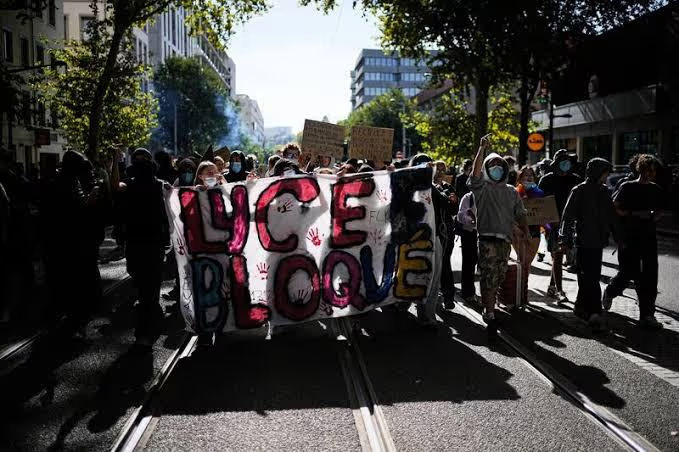
The nationwide demonstrations also grew out of weeks of student protests over education. High school students had been organising blockades and marches since September, citing staff shortages, overcrowded classrooms and deteriorating school facilities.
Students and their supporters called for better-funded schools, adequate teaching staff and improved learning environments. The movement attracted attention beyond education because many participants connected school conditions to broader concerns about public spending, inequality and the quality of public services.
Trade unions, including the CGT, supported the October 17 demonstrations and called for higher wages, stronger pensions, lower prices and public services capable of meeting people's needs.
How the Yellow Vest movement re-entered the picture
The Yellow Vest movement, named after the fluorescent safety vests worn by many demonstrators, became a powerful symbol of public anger in France beginning in 2018. Its protests highlighted concerns among people who felt that economic policy placed a disproportionate burden on lower- and middle-income households.
The October 17 demonstrations brought some veterans of that movement together with students and other campaigners. Organizers described their goal as a convergence of struggles: combining demands over education, living costs, labour conditions and public services into a wider mobilisation.
The comparison with 2018 is useful, but the movements are not identical. The latest demonstrations developed from a student-led campaign over school conditions and expanded to include a broader collection of groups. The extent to which these groups will maintain a common programme beyond the protest day remains uncertain.
Paris sees clashes, fires and looting
Paris experienced some of the most visible disturbances. Police used tear gas and water cannons against groups throwing bottles, stones, fireworks and other objects. Fires were reported involving vehicles and rubbish bins, while several businesses were looted or damaged.
Some metro stations were closed at police request during the unrest, including stations near major government and central-city areas. The closures disrupted travel and made it harder for some residents and visitors to move around affected neighbourhoods.
Le Monde reported that the situation became difficult for police in parts of the capital as confrontations spread across different streets and public spaces. Reuters also described attacks on businesses and public infrastructure.
The disturbances did not represent the behaviour of everyone who joined the marches. News reports also described large groups of peaceful demonstrators chanting slogans, waving French flags and calling for improvements to living standards and public services.
Violence and property damage in other cities
The unrest extended beyond Paris. Authorities and news organisations reported incidents in several major cities and smaller communities.
- Limoges: A fire engulfed the city hall, causing serious damage to the historic municipal building.
- Lyon: A fire broke out at a tourist office, while other disturbances were reported in the city.
- Marseille: Shops and municipal property were damaged, and demonstrators briefly entered the city hall lobby.
- Bordeaux: Authorities reported damage to public property and looting at businesses.
- Other locations: Incidents were also reported in cities including Rennes, Toulouse, Montpellier and Grenoble.
The range of incidents created a substantial challenge for police and emergency services. The damage also raised questions about the protection of public buildings and commercial areas during large demonstrations.
How many people were arrested?
Arrest figures changed as officials issued updates throughout the day and the following days. The Associated Press's initial October 17 report cited Interior Minister Laurent Nuñez as saying approximately 400 people had been arrested nationwide.
Later reporting from Reuters and Le Monde cited Prime Minister Sébastien Lecornu as giving a figure of around 1,200 arrests that evening. Subsequent reporting published after the weekend described the total as rising further, with an Associated Press report on October 19 referring to approximately 2,400 arrests over the weekend.
French officials blamed groups they described as radical or ultra-left for some of the violence, alongside people involved in looting. Those descriptions reflect the authorities' assessment. They should not be applied to every demonstrator or treated as proof that all violent incidents had the same organisers or motive.
A protester loses a hand as scrutiny of police tactics grows
The demonstrations also renewed scrutiny of police use of crowd-control weapons. Authorities said a young protester in Saint-Étienne suffered a severe hand injury during the unrest.
The incident prompted questions about whether a police grenade was involved. Interior Minister Laurent Nuñez did not immediately confirm the precise circumstances, and reports indicated that an investigation had been opened.
The incident occurred against the backdrop of earlier injuries during the student protests. French authorities had already faced criticism over the use of riot-control weapons, while police representatives argued that officers were dealing with dangerous situations involving projectiles and attacks.
Determining what happened to the injured protester requires evidence from the investigation. The reported injury should not be treated as proof of misconduct by a particular officer unless the inquiry establishes that conclusion.
Macron and the government respond
President Emmanuel Macron condemned the violence and said people who vandalised property, attacked public offices or looted businesses should be prosecuted. His message also emphasised the distinction between people expressing demands peacefully and those committing acts of violence.
Prime Minister Sébastien Lecornu also criticised the unrest and said the government would not allow violence to dictate its political agenda. Officials attributed some of the disturbances to organised groups and called for those responsible for attacks and property damage to be held accountable.
The government's response has formed part of a wider debate about how France should handle large demonstrations. Officials have stressed public order and the protection of institutions, while some protesters and political figures have criticised police tactics and the handling of the underlying social grievances.
The competing accounts illustrate two issues that need to be assessed separately: the responsibility of individuals who commit violence and the legitimacy of peaceful demands concerning schools, prices, wages and public services.
Why the protests matter for France's political future
The October 17 demonstrations come as France faces economic pressure, public dissatisfaction and a politically uncertain period ahead of the next presidential election. The protests provide a visible indication that concerns about living standards and the condition of public services remain important political issues.
The participation of students, workers and Yellow Vest veterans suggests that the movement has reached beyond a single group or demand. However, the coalition includes people with different priorities, and it is not yet clear whether the demonstrations will develop into a sustained nationwide campaign.
The scale of the unrest also places pressure on the government to balance public safety with the right to demonstrate. How authorities respond to future marches, school blockades and allegations of excessive force may influence public confidence in the coming months.
For opposition parties and trade unions, the protests offer an opportunity to highlight economic and public-service grievances. For the government, they present the challenge of responding to those demands while maintaining order and addressing violence.
What happens next?
The consequences of the October 17 protests will depend on several developments in the days and weeks ahead.
- Investigations: Authorities will need to establish responsibility for attacks, fires, looting and serious injuries.
- School demands: Students and education groups are likely to continue pressing for improvements in staffing, facilities and learning conditions.
- Trade union action: Unions may continue to push for better wages, pensions and protection for public services.
- Police accountability: Investigations into injuries and the use of crowd-control weapons may influence debate about protest policing.
- Government response: Officials will face pressure to address living costs and public services while preventing further violence.
These are areas to watch rather than predictions that a specific outcome is guaranteed. The scale and direction of future mobilisation will depend on decisions by protest groups, unions, public authorities and the government.
The bigger picture
France's October 17 protests brought economic frustration, education concerns and the legacy of the Yellow Vest movement into the same national mobilisation. Hundreds of thousands took part according to estimates from officials and organisers, while violent incidents in several cities caused injuries and extensive property damage.
The events should not be reduced to either the peaceful marches or the violence alone. Both were part of the day's reporting: many people demonstrated to make their demands heard, while separate groups engaged in confrontations, arson and looting.
The challenge for France now is to establish accountability for specific acts of violence, investigate allegations involving police conduct and address the concerns that brought so many people into the streets. Whether the demonstrations produce lasting political or policy changes remains to be seen.