Women’s Reservation and Delimitation Bills in Parliament: A Breakdown of the Numbers
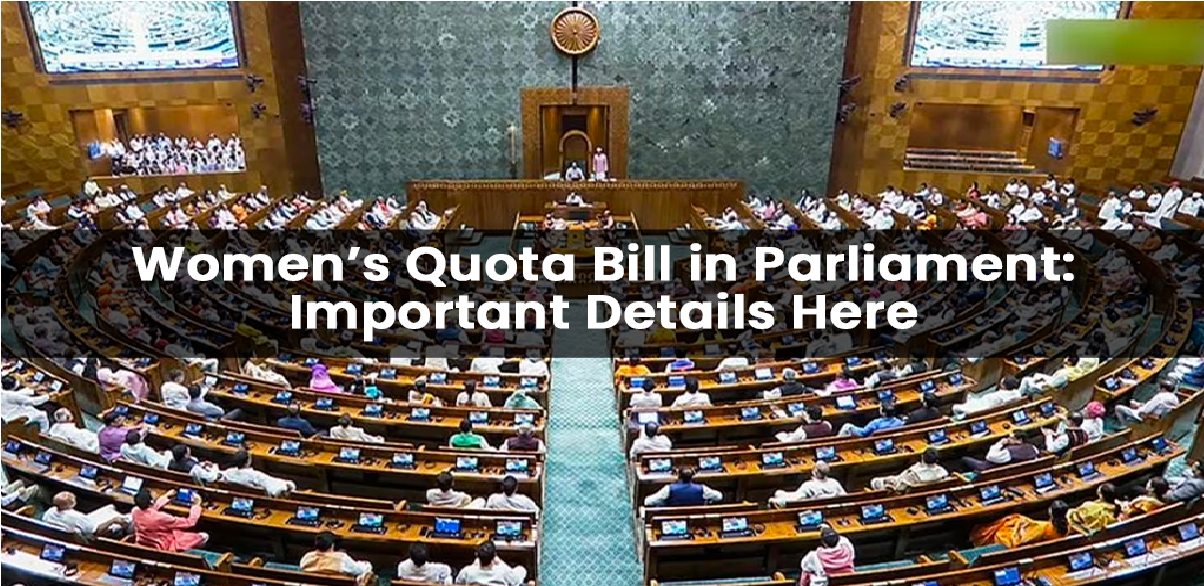
Women’s Reservation and Delimitation Bills in Parliament: Numbers, Politics, and the Road to 2029
In a significant legislative move, the Government of India is set to introduce three major bills in Parliament: the women’s reservation legislation, the delimitation bill, and a proposal to increase the number of seats allocated to Union Territories. These measures, taken together, have far-reaching implications for India’s democratic structure, electoral representation, and political balance ahead of the 2029 general elections.
At the core of this legislative package lies the proposal to implement a 33 per cent reservation for women in the Lok Sabha, a long-debated reform aimed at enhancing gender representation in Indian politics. However, the government’s decision to link this reservation to the delimitation exercise and Census data has introduced both strategic complexity and political controversy.
Understanding the Three Key Bills
1. Women’s Reservation Bill
The proposed legislation seeks to reserve one-third of seats in the Lok Sabha for women. This includes seats reserved for Scheduled Castes (SCs) and Scheduled Tribes (STs), ensuring proportional representation across categories.
The bill represents a historic step toward gender inclusivity in governance. Despite decades of discussion, earlier attempts to pass similar legislation have failed due to political disagreements and concerns about implementation mechanisms.
2. Delimitation Bill
The delimitation bill proposes the creation of a commission responsible for redrawing parliamentary and assembly constituencies based on population changes.
The exercise is expected to rely on data from the 2011 Census, rather than waiting for updated Census figures. Delimitation plays a crucial role in ensuring equitable representation by adjusting constituency boundaries in line with demographic shifts.
3. Expansion of Seats for Union Territories
The third proposal involves increasing representation for Union Territories in Parliament. Currently, there are 20 Members of Parliament (MPs) from Union Territories, compared to 530 from states. The new framework proposes adding 35 seats for Union Territories, alongside a substantial increase in seats for states.
Linking Reservation with Delimitation: A Strategic Move
One of the most debated aspects of the government’s proposal is the decision to link women’s reservation with the delimitation process. This means that the 33% quota for women will only come into effect after constituencies are redrawn based on Census data.
From the government’s perspective, this linkage ensures that reservation is implemented within a revised and updated electoral framework. It also allows for a systematic allocation of reserved seats across newly defined constituencies.
However, critics argue that this approach could delay the actual implementation of women’s reservation, as delimitation itself is a complex and time-consuming exercise. Additionally, concerns have been raised that using 2011 Census data—rather than more recent data—may not accurately reflect current population dynamics.
Constitutional Requirements and Parliamentary Arithmetic
Two of the three proposed bills—the women’s reservation bill and the seat expansion proposal—are constitutional amendment bills. This significantly raises the bar for their passage.
Under the Constitution, such bills require:
A two-thirds majority of members present and voting in both Houses of Parliament
Support from at least half of the total membership of each House
This means that the ruling alliance, led by the National Democratic Alliance (NDA), cannot rely solely on its existing strength and must secure additional support.
Rajya Sabha: A Critical Test
The situation in the Rajya Sabha presents a particularly challenging scenario for the government.
Majority mark: 163
NDA strength: Approximately 142+ members
Shortfall: Around 21 members
This gap underscores the importance of opposition cooperation or strategic abstentions. Even a small shift in voting patterns could determine the fate of the bills.
While many opposition parties have expressed support for women’s reservation in principle, they have voiced strong reservations about linking it with delimitation. This divergence creates a complex political environment where consensus on the broader objective does not necessarily translate into agreement on the method.
Lok Sabha: Numerical Advantage but Not Absolute Certainty
In the Lok Sabha, the NDA enjoys a more comfortable majority. However, constitutional amendments still require careful floor management, as absences, abstentions, or dissent within allied parties can influence the final outcome.
The government is therefore likely to engage in extensive negotiations with both allies and opposition parties to ensure smooth passage.
Opposition Concerns and Political Debate
The opposition’s primary concerns revolve around two key issues:
1. Timing and Conditionality
Opposition leaders argue that linking women’s reservation to delimitation could delay its implementation indefinitely. They contend that reservation should be introduced immediately, without waiting for constituency redrawing.
2. Federal Balance and Representation
Delimitation has historically been a sensitive issue in India due to its potential impact on the balance of representation between states.
States that have successfully controlled population growth—primarily in southern India—fear that delimitation based on population could reduce their representation in Parliament. Conversely, states with higher population growth rates may gain additional seats.
By tying women’s reservation to delimitation, the government has effectively merged two politically sensitive issues, increasing the stakes of the debate.
Seat Expansion: A Major Structural Change
One of the most striking aspects of the proposal is the significant increase in the number of Lok Sabha seats.
Current total seats: 543
Proposed seats for states: Up to 815
Additional seats for UTs: 35
This expansion would represent one of the largest structural changes in India’s parliamentary system since independence.
Implications of Seat Expansion
Improved Representation: Larger populations can be represented more effectively
Administrative Challenges: Managing a significantly larger Parliament will require logistical adjustments
Political Rebalancing: Changes in seat distribution could alter the electoral landscape
Women’s Representation: Current Status and Future Impact
Currently, women constitute a relatively small proportion of MPs in the Lok Sabha. Despite gradual improvements over the years, representation remains below global averages.
The proposed 33% reservation has the potential to:
Increase women’s participation in policymaking
Promote gender-sensitive legislation
Encourage greater political engagement among women
However, its impact will depend on effective implementation and the design of reservation mechanisms.
Historical Context of Women’s Reservation
The idea of reserving seats for women in Parliament has been discussed for decades. Earlier versions of the bill were introduced multiple times but failed to secure consensus.
Key challenges have included:
Demands for sub-quotas for backward classes
Concerns about rotation of reserved seats
Political resistance from various parties
The current proposal represents the most comprehensive attempt yet to address these issues, although debates persist.
Strategic Timing Ahead of 2029 Elections
The government’s push to implement these reforms before the 2029 Lok Sabha elections reflects both policy objectives and political considerations.
By introducing women’s reservation and expanding seats, the government aims to:
Demonstrate commitment to inclusive governance
Reshape electoral dynamics
Strengthen its political base
At the same time, the opposition views these moves through a strategic lens, assessing their potential impact on future elections.
Challenges Ahead
Several hurdles remain before these proposals can become law:
Securing Parliamentary Majority: Especially in the Rajya Sabha
Building Political Consensus: Addressing opposition concerns
Executing Delimitation: A complex administrative exercise
Ensuring Timely Implementation: Aligning reforms with electoral timelines
Broader Implications for Indian Democracy
If passed, these bills could fundamentally reshape India’s democratic framework.
Positive Outcomes
Enhanced gender representation
Updated and equitable constituency boundaries
Improved representation for growing populations
Potential Risks
Political polarization over delimitation
Regional imbalances in representation
Implementation delays
Conclusion
The introduction of the women’s reservation, delimitation, and seat expansion bills marks a pivotal moment in India’s legislative and political landscape. While the proposals aim to modernize representation and promote inclusivity, their success will depend on careful negotiation, consensus-building, and effective execution.
As Parliament debates these measures, the outcome will not only determine the composition of future legislatures but also shape the trajectory of India’s democratic evolution. The coming days are likely to witness intense discussions, strategic maneuvering, and critical decisions that could leave a lasting imprint on the nation’s political framework.
In essence, the numbers in Parliament will tell only part of the story—the larger narrative will be defined by how political will, institutional design, and public interest converge in shaping the future of governance in India.
Tags:
Related Posts

A huge order backlog could drive years of market-beating growth for this leading AI powerhouse.

Legendary radio personality Michel Follet (66) says his world is shrinking: “Even everyday sounds in the supermarket are painful.”