Severe weather causes major disruption at Sydney Airport, leading to dozens of flight cancellations.
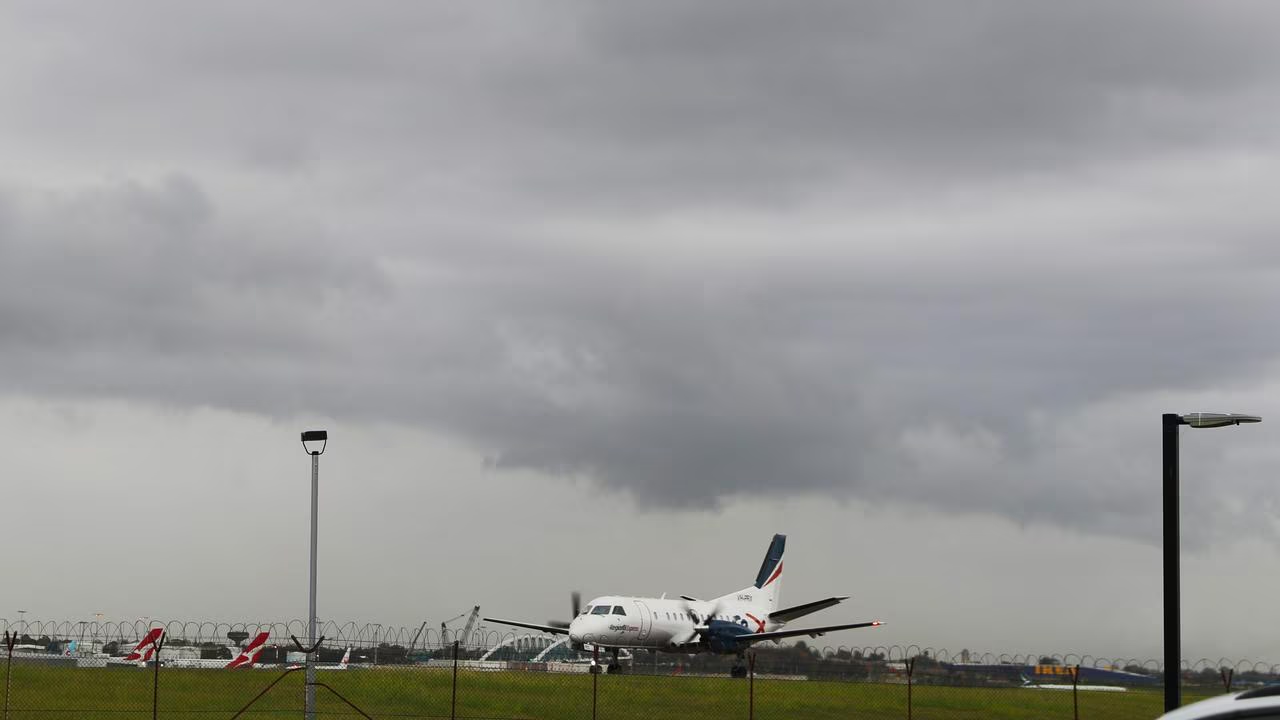
Sydney Airport Chaos: Severe Winds Trigger Mass Flight Cancellations, Disrupting Hundreds of Travellers
In a major disruption to Australia’s aviation network, hundreds of passengers were left stranded or scrambling to rearrange travel plans after severe weather conditions forced the cancellation of dozens of flights at Sydney Airport on Sunday, April 12, 2026. The incident highlights the vulnerability of air travel to sudden weather changes and the cascading effects such disruptions can have on airlines, airport operations, and passengers.
Widespread Disruptions Across Major Airlines
The chaos unfolded as strong westerly winds swept across Sydney, creating unsafe conditions for normal airport operations. As a result, flights operated by major Australian carriers, including Virgin Australia, Qantas, and Jetstar, were either cancelled or delayed.
According to official updates from Sydney Airport’s flight information system, by 5:30 PM on Sunday:
33 arriving flights were cancelled
24 departing flights were cancelled
Dozens of additional flights experienced significant delays
This sudden disruption created a ripple effect throughout the day, impacting not just passengers traveling to and from Sydney but also connecting flights across the country and internationally.
Weather Conditions Behind the Chaos
The primary cause of the disruption was strong and persistent crosswinds that made it unsafe to operate both of Sydney Airport’s parallel runways simultaneously. In response, Airservices Australia, the country’s air traffic control authority, made the critical decision to switch to single runway operations.
This move, while necessary for safety, significantly reduced the airport’s capacity to handle flights.
An Airservices Australia spokesperson explained that the decision was made in coordination with airline operators and meteorological experts, including the Bureau of Meteorology.
“The decision to move to single runway operations was made in co-operation with our airline customers and the Bureau of Meteorology and was in line with international safety regulations for runway crosswinds.”
Crosswinds—winds blowing perpendicular to the runway—pose serious risks during takeoff and landing. Aircraft have strict operational limits for crosswinds, and exceeding these limits can compromise safety. Therefore, reducing operations to a single runway aligned with the wind direction is a standard safety measure used worldwide.
Advance Warnings but Inevitable Impact
Airservices Australia confirmed that airlines were given advance notice about the incoming weather conditions the night before. This allowed carriers to prepare for potential disruptions, including adjusting schedules and notifying passengers.
However, despite these preparations, the severity of the winds meant that cancellations were unavoidable.
“Delays are expected. We will continue to work closely with industry to minimise impacts for the travelling public,” the spokesperson added.
Even with proactive planning, the sheer volume of scheduled flights at one of Australia’s busiest airports meant that any reduction in runway capacity would inevitably lead to congestion and cancellations.
Passenger Experience: Plans Thrown Into Disarray
For travellers, the disruption translated into long waits, uncertainty, and frustration. Hundreds of passengers found themselves stuck at terminals, monitoring constantly updating flight boards filled with cancellation notices and delays.
Many travellers had to:
Rebook flights at short notice
Adjust accommodation plans
Miss connecting flights or important commitments
Airport terminals saw increased congestion as passengers queued at airline service counters seeking assistance.
Airlines urged customers to check their flight status online before heading to the airport and to stay in contact with their respective carriers for updates.
Airline Responses and Recovery Efforts
Each airline responded differently but with a common focus on safety and customer support.
Virgin Australia
A spokesperson from Virgin Australia acknowledged the disruption and emphasized safety as the top priority:
“Some services on Virgin Australia’s network have been impacted by adverse weather in Sydney today… The safety of our guests and crew is our top priority.”
The airline confirmed that its meteorological team was closely monitoring the situation and that efforts were underway to get passengers to their destinations as quickly as possible.
Qantas and Jetstar
Meanwhile, Qantas and its low-cost subsidiary Jetstar adopted a strategy of flight consolidation, combining passengers from multiple cancelled flights onto fewer operating services.
They also:
Contacted affected customers directly
Offered rebooking options
Arranged alternative flights within 24 hours for most passengers
This approach helped reduce the backlog while ensuring that available flights were used as efficiently as possible.
Operational Challenges at Sydney Airport
Sydney Airport is one of the busiest aviation hubs in the Southern Hemisphere, handling hundreds of domestic and international flights daily. Its operations rely heavily on dual parallel runways, which allow for simultaneous takeoffs and landings.
Switching to a single runway drastically reduces capacity, leading to:
Fewer aircraft movements per hour
Increased delays due to air traffic congestion
Greater reliance on precise scheduling
In such situations, even minor delays can quickly escalate into widespread disruption, as aircraft and crew rotations fall out of sync.
Gradual Return to Normalcy
By Sunday evening, conditions began to improve as wind speeds eased. Authorities indicated that the airport would soon resume dual runway operations, restoring normal capacity.
This transition was expected to:
Reduce delays
Allow more flights to operate
Help airlines clear the backlog of passengers
However, full recovery often takes time. Even after weather conditions improve, airlines must reposition aircraft, crews, and passengers, which can extend disruptions into the following day.
Broader Implications for Air Travel
This incident serves as a reminder of the critical role weather plays in aviation. Despite advances in technology and forecasting, weather remains one of the most unpredictable factors affecting flight operations.
Key takeaways include:
1. Safety Comes First
Airlines and aviation authorities prioritize safety above all else. Decisions like runway restrictions and flight cancellations, while inconvenient, are essential to prevent accidents.
2. Importance of Flexibility
Passengers are increasingly advised to remain flexible when traveling, especially during seasons prone to extreme weather.
3. Need for Real-Time Communication
Timely updates from airlines and airports are crucial in helping passengers manage disruptions effectively.
Advice for Travellers
In light of such incidents, travellers can take several steps to minimize inconvenience:
Check flight status regularly before leaving for the airport
Sign up for airline notifications via SMS or email
Allow extra travel time, especially during adverse weather conditions
Consider travel insurance to cover unexpected disruptions
Stay informed through official airport and airline channels
Conclusion
The Sydney Airport disruption on April 12, 2026, underscores how quickly weather events can impact even the most well-organized aviation systems. With dozens of flights cancelled and many more delayed, the incident caused significant inconvenience for hundreds of travellers.
However, it also demonstrated the effectiveness of coordinated responses between aviation authorities, airlines, and meteorological agencies. The swift implementation of safety measures, combined with efforts to assist affected passengers, helped manage what could have been an even more severe crisis.
As operations return to normal, the focus now shifts to recovery and ensuring that all stranded passengers reach their destinations as smoothly as possible. For travellers, the event is a reminder to stay prepared, informed, and adaptable in the face of unexpected disruptions.
Focus Keyword: Sydney Airport flight cancellations 2026
SEO Title: Sydney Airport Chaos 2026: Dozens of Flights Cancelled Due to Severe Winds
Meta Description: Severe winds caused massive flight cancellations at Sydney Airport on April 12, 2026, disrupting hundreds of travellers. Here’s a detailed breakdown of what happened and how airlines responded.
Tags:
Related Posts

CRPF Constable Tradesmen Recruitment 2026

Chandigarh Recruitment 2026: Apply Online for 257 Clerk and Steno Typist Vacancies