Pralhad Joshi Says Education Ministry Is a New Responsibility for Him After Taking Charge
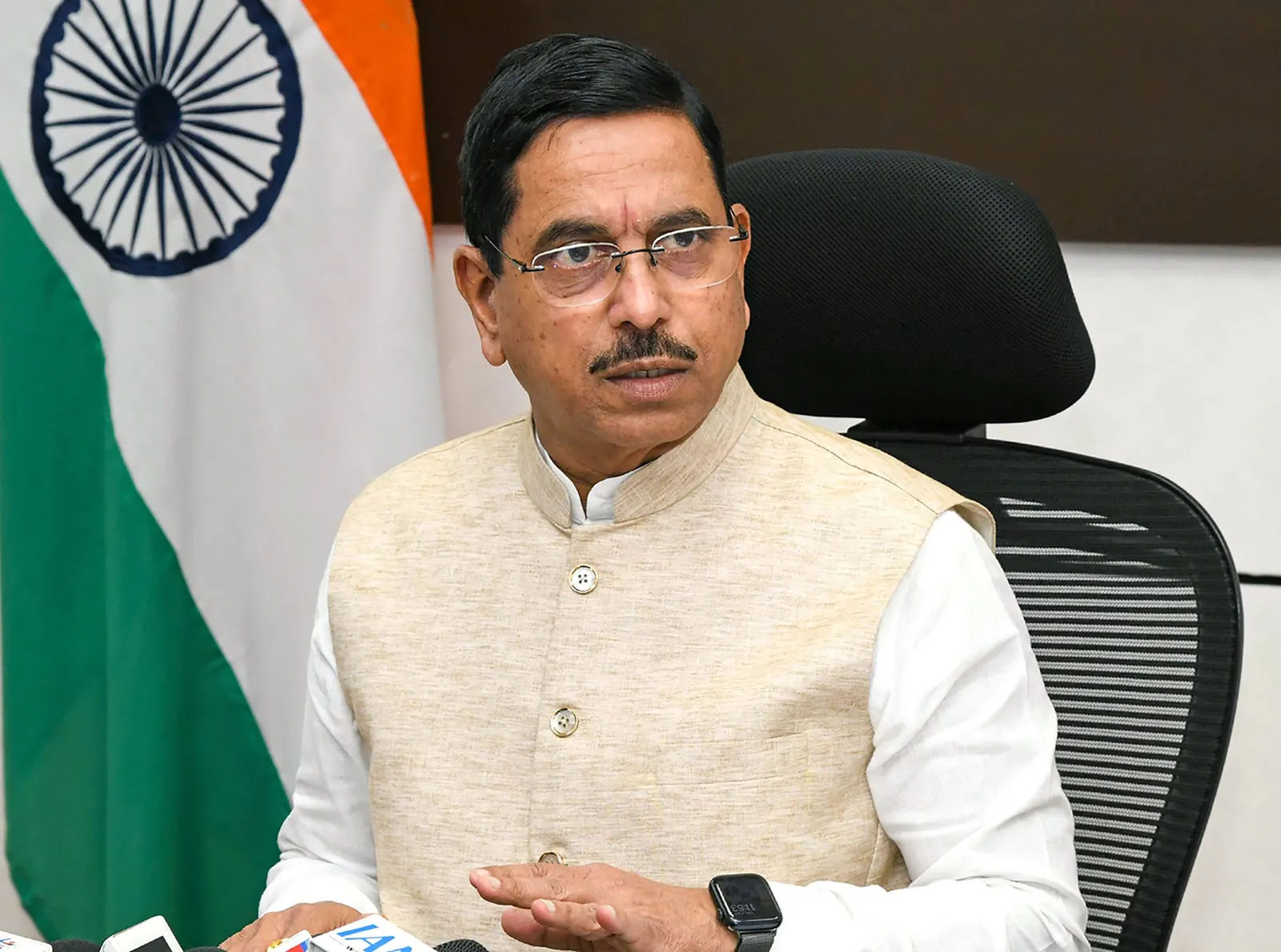
‘This Is a New Subject for Me’: Pralhad Joshi Takes Charge as Union Education Minister
Senior Bharatiya Janata Party leader Pralhad Joshi has taken charge of the Union Ministry of Education, acknowledging that the education sector is a new area of responsibility for him. Joshi received the additional charge of the ministry after President Droupadi Murmu accepted the resignation of former Education Minister Dharmendra Pradhan. Speaking after assuming office, Joshi said he was studying the ministry’s functioning and familiarising himself with its different departments and responsibilities.
Joshi thanked Prime Minister Narendra Modi for entrusting him with the responsibility and said he would carry out his duties with humility, honesty and dedication. His statement that education is a new subject for him appeared to be a candid acknowledgement that he would require time to understand the ministry’s complex administrative, academic and policy structure.
Pralhad Joshi Assumes Additional Charge
Pralhad Joshi has not been appointed only as a standalone Education Minister. He has been given the additional charge of the Ministry of Education while continuing to manage his existing ministerial responsibilities. Government records list him as a Cabinet minister handling major portfolios, including Consumer Affairs, Food and Public Distribution, and other responsibilities assigned to him by the Union government.
The decision to give Joshi the education portfolio highlights the government’s confidence in his administrative experience and political seniority. He is an experienced parliamentarian and has previously held important responsibilities in the Union government. His appointment comes at a time when the Education Ministry is facing intense public scrutiny over the management of national-level examinations, student concerns and the credibility of testing systems.
What Did Pralhad Joshi Say?
After taking charge, Joshi openly stated that education was a new subject for him. He explained that he had begun reviewing the work of the ministry and was trying to understand its departments, programmes and administrative framework. His comment indicated that he did not want to make immediate claims about policies before gaining a detailed understanding of the sector.
He also expressed gratitude to Prime Minister Modi and said he had accepted the new responsibility with a sense of duty and humility. Joshi promised to work sincerely under the Prime Minister’s guidance. His initial remarks focused more on learning, responsibility and administration than on announcing any immediate policy changes.
This approach may be significant because the Education Ministry oversees a large and diverse system involving schools, universities, technical institutions, national examinations, scholarships, teacher education, research and skill development. Understanding these interconnected areas will be one of Joshi’s first major challenges.
Why Was There a Change in the Education Ministry?
The leadership change took place after Dharmendra Pradhan resigned from the Union Council of Ministers. President Droupadi Murmu accepted his resignation on the advice of the Prime Minister, after which Pralhad Joshi was assigned the education portfolio.
The resignation came amid widespread controversy and demonstrations connected to alleged irregularities in national examinations, particularly concerns surrounding the NEET examination system. Reports indicated that student groups and campaigners had been protesting for several weeks, demanding accountability, transparency and stronger action against paper leaks and examination malpractice.
Dharmendra Pradhan reportedly stepped down by accepting moral responsibility amid the growing controversy. His departure became one of the most significant political consequences of the examination-related protests. The government moved quickly to fill the vacancy by assigning the ministry to Joshi.
Appointment Comes at a Sensitive Time
Pralhad Joshi has entered the Education Ministry during a particularly challenging period. Students and parents are seeking greater confidence in the fairness and security of national examinations. Concerns about question-paper leaks, delays, irregularities and examination transparency have increased pressure on the government and its testing agencies.
The immediate task before the new minister is therefore not limited to managing routine educational administration. He may also have to address the larger issue of restoring trust in the examination system.
For millions of students, competitive examinations determine access to professional education, government employment and higher education opportunities. Any doubt about the integrity of these examinations can affect candidates’ confidence and create wider social and political dissatisfaction.
Joshi’s response to these concerns will be closely observed by students, educational institutions, opposition parties and civil society organisations.
Understanding the Education Ministry
The Union Ministry of Education is broadly responsible for both school education and higher education. Its work involves implementing national education policies, supporting states, managing central institutions and overseeing programmes related to access, quality and inclusion.
The ministry also deals with major institutions and systems connected to universities, technical education, teacher training, research and competitive examinations. It works with organisations responsible for school boards, entrance examinations, higher-education regulation and national academic programmes.
Because of this broad mandate, Joshi will need to familiarise himself with several major policy areas, including:
National Education Policy implementation
School education quality and learning outcomes
University and higher-education reforms
Examination security and transparency
Teacher recruitment and training
Digital education
Research and innovation
Student scholarships and inclusion
Technical and vocational education
His comment that education is a new subject may therefore reflect the scale and complexity of the portfolio rather than a lack of administrative experience.
Major Challenges Before Pralhad Joshi
One of his most urgent challenges will be dealing with examination-related controversies. Students are likely to expect clear measures to prevent paper leaks, improve accountability and ensure that those responsible for misconduct face timely action.
Reports have indicated that the government is considering stronger measures related to unfair practices in public examinations, including tougher legal provisions and faster investigation of examination fraud.
A second major challenge will be ensuring the effective implementation of the National Education Policy. Policy implementation requires coordination among the Union government, state governments, universities, schools, regulatory institutions and teachers.
A third challenge concerns the quality of education. Expanding enrolment is important, but students must also receive meaningful learning opportunities, capable teachers, appropriate infrastructure and relevant skills.
Another concern is educational inequality. Students from rural areas, economically weaker families, marginalised communities and remote regions often face barriers in accessing good schools, digital resources and coaching opportunities. Policies will need to address both access and quality.
The minister will also need to examine the role of technology in education. Digital learning can improve access, but unequal availability of devices and internet services can deepen existing inequalities if policies are not designed carefully.
Need to Restore Confidence Among Students
The new minister’s most important responsibility may be to rebuild confidence among students. Examination controversies do not affect only marks or admissions; they can also damage young people’s belief in public institutions.
Students invest years of preparation, money and emotional effort in competitive examinations. When a paper leak or administrative failure is reported, candidates may feel that their hard work has been devalued.
Joshi will therefore be expected to ensure that examination authorities follow transparent procedures, communicate clearly and respond quickly whenever irregularities are detected.
Possible measures could include stronger digital security, improved supervision of examination centres, better coordination among agencies, independent audits and timely publication of investigation findings.
Political Importance of the Appointment
The appointment also has political significance. The government chose a senior and experienced leader to handle the education portfolio during a period of public pressure. This suggests that the ministry currently requires not only policy expertise but also political management, communication and crisis-handling ability.
Joshi’s experience as a parliamentarian may help him respond to questions in Parliament and engage with different stakeholders. However, his success will ultimately depend on whether the government is able to deliver visible improvements in examination management and educational governance.
Opposition parties are also likely to closely monitor the new minister’s actions. Any delay or lack of transparency may lead to renewed criticism, while meaningful reforms could help the government regain public confidence.
What His ‘New Subject’ Remark Means
Joshi’s statement should not necessarily be interpreted as saying that he is unprepared to serve as a minister. Rather, it can be understood as an admission that the education sector has specialised systems, terminology and policy challenges that require careful study.
By acknowledging that the subject is new to him, Joshi has set an expectation that he will initially focus on briefings, consultations and institutional reviews.
The remark may also help him avoid making premature commitments. However, because the ministry is facing urgent issues, the period available for learning may be limited. Students and the public are likely to expect early signs of action.
His effectiveness will depend on how quickly he understands the major problems, consults experts and converts administrative reviews into practical decisions.
Expected Priorities of the New Minister
Although Joshi did not immediately announce a detailed reform plan, several areas are likely to demand priority attention.
First, the ministry must strengthen the security and credibility of national examinations.
Second, it must improve communication with students during controversies, delays or changes in examination schedules.
Third, it must continue the implementation of education reforms while ensuring that states and institutions receive adequate support.
Fourth, the ministry needs to improve coordination among examination agencies, universities, school boards and regulatory bodies.
Fifth, policies must remain focused on students from disadvantaged communities so that reforms do not benefit only those with better financial and digital resources.
Important Points
Pralhad Joshi has taken charge of the Union Education Ministry.
He has received the ministry as an additional responsibility.
He succeeded Dharmendra Pradhan, whose resignation was accepted by the President.
Joshi said that education is a new subject for him.
He is currently reviewing the ministry’s work and familiarising himself with its departments.
He thanked Prime Minister Narendra Modi for assigning him the responsibility.
Joshi promised to work with humility, honesty and dedication.
His appointment comes amid concerns regarding national examinations and alleged irregularities.
Restoring student confidence and examination credibility will be among his biggest challenges.
The Education Ministry also faces major responsibilities involving school education, universities, research, digital learning and National Education Policy implementation.
Conclusion
Pralhad Joshi’s appointment as Union Education Minister represents an important leadership change at a sensitive moment for India’s education system. His acknowledgement that education is a new subject for him reflects a cautious and realistic beginning.
However, the challenges before him are immediate. Students are demanding secure examinations, transparent systems and accountability. Educational institutions also require clear policy direction, effective coordination and continued support.
Joshi’s political and administrative experience may help him manage the ministry, but his performance will be judged by the actions taken to restore trust, strengthen examination systems and improve educational governance.
The coming weeks will show whether his initial promise to work with humility and dedication is followed by concrete measures. For students, teachers and institutions across the country, the key expectation will be that the new leadership produces a more reliable, fair and responsive education system.
Tags:
Related Posts