Hyundai plans ₹45,000 crore investment over 5 years, to introduce luxury brand ‘Genesis’
New Delhi:
When Jose Muñoz took charge as Hyundai’s global president and CEO in January 2025 — becoming the first non-Korean to hold the position — he brought with him not just a global outlook but a deep conviction that India would define Hyundai’s future. The Spanish-born, US-based executive sees India not merely as another market, but as a central pillar of Hyundai’s long-term global competitiveness.
“India is not just important for Hyundai’s global strategy — India is Hyundai’s global strategy,” Muñoz said, summing up his vision for the company’s next decade.
Hyundai Motor Company, the world’s third-largest carmaker by volume, has announced an ambitious roadmap for India that includes a ₹45,000-crore investment by FY2030, 26 new model launches, a strong focus on electrification, and the introduction of its luxury marque Genesis in 2027. The plan reflects Hyundai’s growing confidence in India’s economic potential, youthful demographics, and its evolving consumer aspirations.
A Massive Investment Plan
Hyundai’s fresh infusion of ₹45,000 crore will be directed toward expanding local manufacturing, developing new models, and accelerating electric vehicle (EV) adoption. This makes it one of the largest investment commitments in India’s automotive sector in recent years.
The company aims to achieve 1.5x revenue growth, crossing the ₹1 lakh crore mark by FY2030, backed by sustained double-digit EBITDA margins and a dividend payout ratio of 20–40%.
Under this plan, Hyundai will roll out 26 new vehicles, including seven brand-new nameplates, eight hybrid models, and five fully electric vehicles. The company is also working to localize EV production by investing in battery assembly, charging infrastructure, and partnerships with domestic suppliers.
“We are designing India-centric products while maintaining Hyundai’s global DNA of innovation, safety, and quality,” Muñoz said. “But we are very clear — planning is only 1% of success; execution is 99%.”
Why India Matters
For Muñoz, India’s strategic importance goes beyond sales. It represents a dynamic mix of opportunity, scale, and resilience — a market that can prepare Hyundai to compete globally.
“When we look at India, we see immense potential among the millions who currently use motorcycles and three-wheelers. They aspire to own a car — and that aspiration will fuel long-term demand,” he explained.
Muñoz sees two Indias coexisting: one that mirrors global markets, with strong demand for SUVs, connected cars, and off-roaders; and another where entry-level vehicle ownership is still taking off. “Both Indias are crucial for us,” he said. “The first drives premiumization; the second represents explosive growth potential. Together, they make India a rocket-powered market.”
Hyundai projects that India’s total auto industry volume will reach 5.6 million units by 2030, making it one of the largest car markets in the world. The company expects India to become its second-largest region by sales volume, trailing only North America.
The Hyundai–India Journey
Hyundai entered India in 1996 and made an instant mark with its first model — the Santro. Over the past 28 years, the company has grown from a challenger brand to India’s second-largest carmaker, with a market share of about 15%.
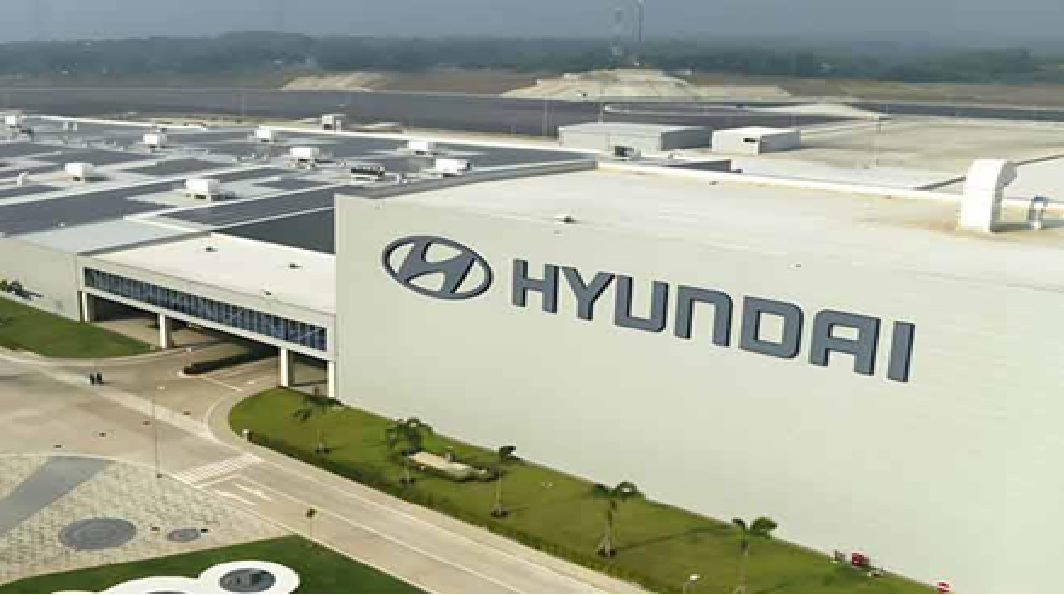
From the compact Santro to premium SUVs like the Creta, Venue, and Tucson, Hyundai has consistently adapted to changing customer preferences. The company’s Chennai-based plant remains one of its most advanced facilities globally, exporting to over 100 countries.
“India is already a crucial export base for Hyundai,” said Rajiv Kumar, an auto analyst at CRISIL. “With the new investments and EV focus, it’s poised to become a key production and R&D hub for the Asia-Pacific region.”
EVs and Sustainability at the Core
As the global auto industry transitions toward sustainability, Hyundai plans to position itself at the forefront of India’s EV revolution.
Of the 26 new models planned by 2030, five will be pure EVs, developed for Indian conditions but aligned with global standards. The company already sells the Ioniq 5 and Kona Electric in India, both well-received for their performance and design.
Hyundai’s EV roadmap also includes developing local charging infrastructure and investing in battery assembly to reduce costs. The company is working with the Tamil Nadu government — where its main plant is located — to strengthen EV supply chains and create jobs in green manufacturing.
“India’s EV ecosystem is still developing, but we want to lead, not follow,” Muñoz said. “Hyundai’s global experience gives us a strong advantage. We’re committed to making electrification accessible to Indian consumers.”
Small Cars Still Matter
Despite the global shift toward SUVs, Muñoz emphasized that Hyundai would continue to focus on small cars, a segment long associated with its success in India.
“We are not going to abandon the small car market,” he stated. “It makes us more competitive and allows us to connect with a broader customer base. Small cars help customers move up the ladder — from entry-level models to larger SUVs or EVs.”
Hyundai’s small car lineup — including the Grand i10 Nios and Aura — continues to perform well, especially in semi-urban and Tier-2 cities. The company believes these models play a vital role in brand loyalty and affordability.
Welcoming Competition
India’s automotive space has become fiercely competitive, with Maruti Suzuki, Tata Motors, and Mahindra & Mahindra strengthening their portfolios. Muñoz, however, views this as a positive trend.
“The local brands have improved dramatically,” he said. “Their designs, reliability, and road presence are impressive. We welcome competition because we perform better when we are challenged.”
He believes that thriving in India’s competitive market will prepare Hyundai to take on global rivals, including rapidly expanding Chinese automakers.
“The Indian market itself is becoming one of the most competitive in the world. If we succeed here, we can compete anywhere — even with the Chinese,” he asserted.
Genesis: Hyundai’s Luxury Gamble in India
One of the most anticipated parts of Hyundai’s India strategy is the launch of its luxury division, Genesis, in 2027.
The brand, which competes globally with Mercedes-Benz, BMW, and Lexus, will make its India debut with locally manufactured models, marking Hyundai’s entry into the premium luxury segment for the first time.
“We plan to produce Genesis models in India,” Muñoz confirmed. “The demand for luxury cars is growing, and we see strong potential here.”
Globally, Genesis has earned accolades for its refined design, advanced technology, and customer experience. In markets like the US and South Korea, it has carved out a niche among discerning buyers seeking luxury at competitive prices.
Auto industry experts believe Genesis could appeal to India’s rising affluent class — a group increasingly drawn to luxury experiences but open to non-European brands.
“Genesis entering India is significant,” said Niraj Chopra, Editor of AutoScope Magazine. “It signals Hyundai’s maturity as a global player and its confidence in India’s premium car demand.”
Balancing Growth and Shareholder Value
Even as Hyundai sets ambitious growth targets, it remains committed to financial prudence. The company plans a 20–40% dividend payout while pursuing aggressive capital expenditure — a move that reflects balance between reinvestment and investor returns.
“That’s part of our long-term thinking,” Muñoz said. “We are not a short-term-oriented company. Our focus is on sustainable value — investing while rewarding shareholders.”
This disciplined approach, he added, ensures that Hyundai remains financially strong even as it navigates technological transitions and global uncertainties.
India’s Policy Push for Green Mobility
Hyundai’s timing aligns well with India’s policy direction. The government’s FAME-II scheme, production-linked incentives (PLI) for advanced cell chemistry, and the push for 30% EV penetration by 2030 are reshaping the auto landscape.
Several states — including Tamil Nadu, Maharashtra, and Gujarat — have rolled out EV-friendly policies offering subsidies, tax breaks, and infrastructure support. These have encouraged both Indian and foreign automakers to invest in local EV ecosystems.
Analysts believe Hyundai’s large-scale commitment complements India’s vision of becoming a global clean mobility hub. “With Hyundai’s technological expertise and local partnerships, India could evolve into a major EV export base,” said Sonal Mehta, Senior Researcher at BloombergNEF.
Consumer Trends: A Shifting Market
Indian buyers are evolving fast — moving from entry-level hatchbacks to SUVs, premium sedans, and EVs. Younger consumers, particularly in urban centers, are drawn to connected, tech-rich vehicles that reflect lifestyle and sustainability values.
Hyundai has adapted quickly, offering advanced features like ADAS (Advanced Driver Assistance Systems), connected infotainment, and over-the-air (OTA) software updates even in mid-range models.
The company is also investing in AI-driven service diagnostics, digital retail platforms, and subscription-based ownership models to appeal to tech-savvy buyers.
“Today’s car buyer is informed, digital-first, and environmentally conscious,” Muñoz said. “We want Hyundai to be their first and last choice.”
A Decade of Transformation Ahead
Hyundai’s ambitious India plan comes at a time when the global auto industry is undergoing seismic shifts — from electrification and automation to supply chain localization and AI-led design.
For Muñoz, however, India offers a unique blend of scale, innovation, and resilience.
“If we can succeed in India, we can succeed anywhere,” he said. “This market teaches adaptability, efficiency, and customer focus like no other.”
As Hyundai accelerates its next growth phase — investing billions, introducing new technologies, and launching its luxury arm — its message is clear: India is not just a growth engine; it’s the company’s competitive testing ground for the future.
The coming decade will show whether Hyundai can translate its massive investments and bold ambitions into sustained leadership. But for now, as Diwali approaches and India’s car market revs up, the company’s confidence is unmistakable.
“We’re here for the long haul,” Muñoz concluded. “We’re building Hyundai India not just for the next few years — but for the next generation.”
Related Posts