How Contemporary Infrastructure Protects Alexandria’s Historic Raml Tram
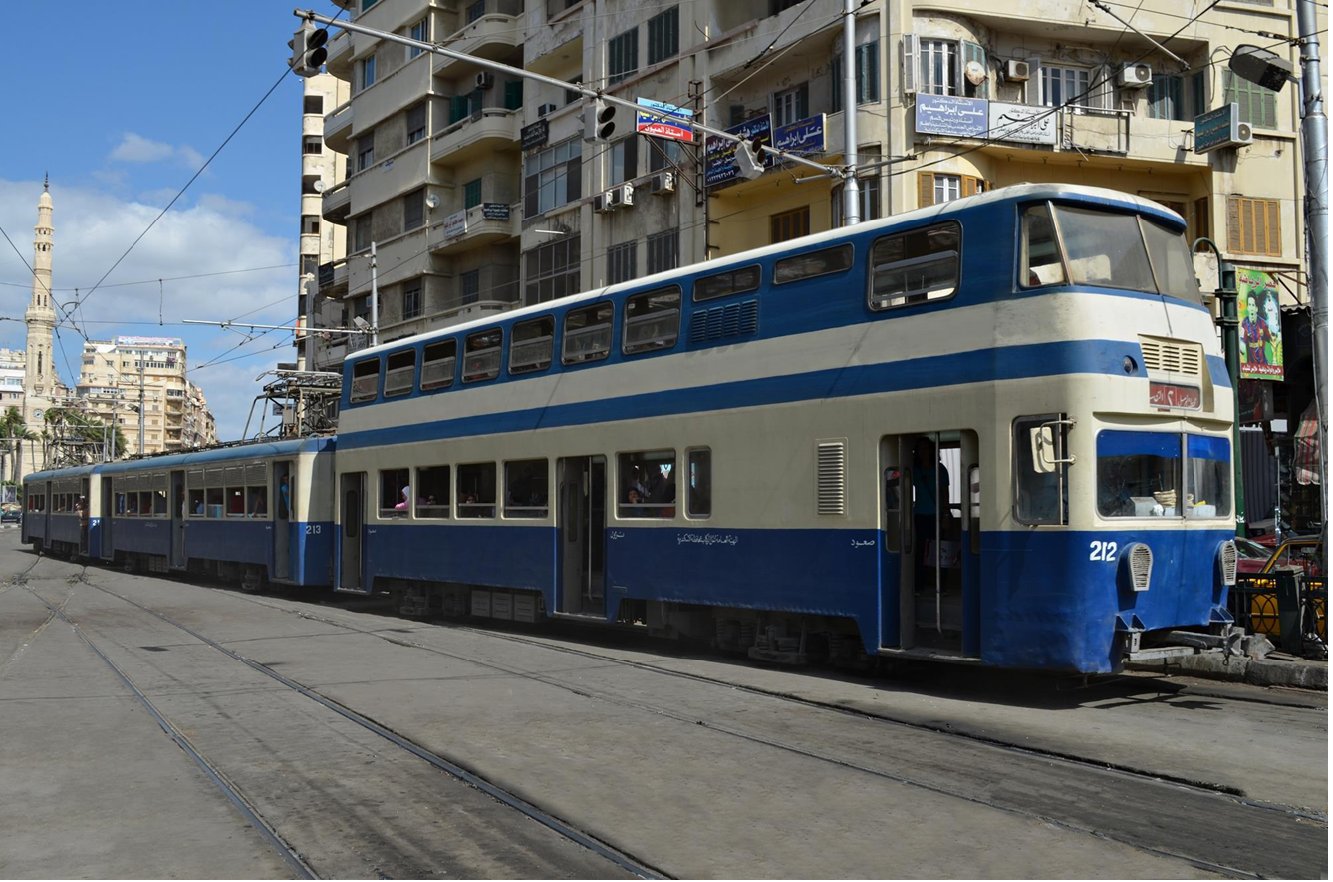
Alexandria, Egypt — For more than a century, the rhythmic clatter of the Raml Tram has echoed through the streets of Alexandria, tracing a path that connects the city’s layered history with its ever-evolving urban present. Today, as Egypt embarks on a massive rehabilitation project for this historic tram line, the initiative stands as both a technical modernization and a cultural preservation effort — an attempt to reconcile the demands of the 21st century with the spirit of a bygone era.
A Century of Connection
Few cities in the Mediterranean region possess the cultural and architectural depth of Alexandria. Founded by Alexander the Great and shaped by countless civilizations, the city has long served as a crossroads of trade, culture, and innovation. Amid this blend of heritage, the Raml Tram has remained a constant — weaving through neighborhoods, carrying generations of Alexandrians, and symbolizing the endurance of a city that continues to adapt without forgetting its past.
The tramway first appeared in Alexandria in the 1860s, making it one of the oldest tram systems in Africa and the Middle East. Its Raml line, in particular, soon became an inseparable part of the city’s daily rhythm. Connecting the bustling downtown area with the eastern districts near the coast, the line did more than transport passengers — it became a social equalizer, a landmark of everyday life, and a thread that tied together diverse communities.
For decades, the Raml Tram stood as a testament to Alexandria’s cosmopolitan spirit — a living relic of the city’s colonial-era infrastructure that continued to operate amid modern traffic and urban congestion. Yet by the early 21st century, the system was showing its age. Years of underinvestment had left it inefficient, slow, and in many areas, outdated. The infrastructure was deteriorating, the rolling stock was obsolete, and its once-graceful service had become a bottleneck in a rapidly growing metropolis.
Balancing Heritage and Modernization
Recognizing the tram’s importance to Alexandria’s identity, Egypt’s government launched a comprehensive modernization initiative that seeks not only to upgrade the system but to preserve its historical significance. Officials and engineers describe the project as a “living preservation” — a strategy that revitalizes the tram’s function while respecting its cultural symbolism.
“The Raml Tram is more than a mode of transport,” said an official from the National Authority for Tunnels (NAT), the agency overseeing the project. “It is a bridge between generations, a moving landmark of Alexandrian life. Our goal is to make it efficient, accessible, and sustainable — without erasing its soul.”
The modernization project, currently underway, covers approximately 13.2 kilometers of track stretching from Victoria Station in the east to El Raml Station near the city center. The route traverses key neighborhoods including San Stefano, Sidi Gaber, Sporting, Ibrahimia, and Rushdi, serving some of the city’s most populated and commercially vibrant districts.
When completed, the line will feature 24 stations, integrating modern design elements while retaining architectural cues that reflect Alexandria’s historic charm. The alignment includes 5.7 kilometers of surface track, 7.3 kilometers of elevated track, and 276 meters underground — a hybrid structure designed to minimize disruption to traffic and urban activity.
Technical Ambition with Cultural Sensitivity
The project’s primary objective is to transform the Raml Tram into a fast, reliable, and sustainable urban transit line. Its performance upgrades are ambitious: doubling average operating speeds to 21 km/h, reducing total journey time from 60 minutes to 35 minutes, and cutting headways from nine minutes to just three. Passenger capacity is expected to triple, from 4,700 to 13,800 passengers per hour per direction, dramatically improving mobility for thousands of daily commuters.
Yet beyond the statistics, what makes the Raml project unique is its sensitivity to the city’s cultural and visual landscape. Alexandria’s seafront architecture, narrow streets, and mix of Ottoman, colonial, and modernist buildings require careful planning to ensure that new infrastructure integrates harmoniously with the existing urban fabric.
Engineering firm SYSTRA, along with local and international partners, has worked to balance technological modernization with heritage preservation. “The challenge is not just about upgrading a tram,” said a senior SYSTRA designer involved in the project. “It’s about renewing a piece of Alexandria’s collective memory. Every decision — from station design to alignment — has to respect the city’s character.”
The project’s design team has incorporated heritage-inspired motifs into new station façades, maintained the tram’s distinctive yellow-and-blue color palette, and proposed landscaped corridors that echo the historical ambience of old Alexandria. Public engagement initiatives have also been launched to involve local communities in design feedback, ensuring that the new tram remains familiar and beloved.
Infrastructure Meets Identity
In cities like Alexandria, infrastructure projects often extend far beyond their engineering scope. They become statements about identity, progress, and cultural continuity. The Raml Tram embodies this dual mission — to modernize transport while reaffirming the narrative of a city that refuses to discard its heritage.
Urban sociologists often describe transport systems as “memory lines” — physical routes that also map the evolution of a city’s people and stories. The Raml line, passing through areas such as Janaklees, Mustafa Kamel, and Sidi Gaber, connects not only urban zones but also social histories. Many Alexandrians recall taking the tram to school, to the Corniche, or to bustling El Raml Square — experiences that form part of the city’s shared nostalgia.
The modernization effort therefore represents more than an infrastructure upgrade; it is a cultural project that reaffirms the value of preserving local icons amid urban transformation. “If we only build new things, we lose our sense of continuity,” said an Alexandria-based urban historian. “By investing in the Raml Tram, we’re saying that heritage can evolve — that history is not static.”
Stakeholders and Collaboration
The modernization of the Raml Tram is being led by the National Authority for Tunnels (NAT), under Egypt’s Ministry of Transport. The construction is being carried out by Hassan Allam Construction and The Arab Contractors, two of Egypt’s largest infrastructure firms. The project’s financial backing comes primarily from the European Investment Bank (EIB), which views the tram as a model of sustainable urban mobility in the Mediterranean region.
International consultants and local agencies have collaborated closely to ensure that global best practices align with Alexandria’s specific needs. The project also forms part of a broader Egyptian strategy to improve urban transport networks — alongside developments such as the Cairo Metro expansions, the Alexandria Metro proposal, and new high-speed rail corridors.
Completion is currently projected for 2027, with construction progressing in multiple phases to minimize disruption to traffic and local businesses. Authorities have emphasized environmental management, accessibility, and public safety as central components of the design process.
Community Reactions and Expectations
Reactions among Alexandrians have been largely positive, though tinged with cautious optimism. Many residents welcome the prospect of shorter travel times and improved comfort, while others express hope that the modernization will retain the tram’s historic character.
“Everyone in Alexandria has memories of this tram,” said Mona El-Hady, a teacher from Sidi Gaber. “We want it to run better, faster, cleaner — but we also want it to feel like our tram, not just another concrete project.”
City officials have echoed this sentiment, emphasizing that the modernization will not erase the Raml Tram’s visual identity. Plans include preserving select heritage stations, restoring old depots, and installing interpretive signage that tells the story of the line’s history. Heritage preservation groups have also been consulted to ensure that the renovation aligns with cultural conservation principles.
Beyond Efficiency: A Symbol of Urban Renewal
The Raml Tram modernization is part of a broader transformation sweeping through Egypt’s coastal cities. As Alexandria grapples with issues of population growth, traffic congestion, and climate vulnerability, sustainable transport solutions are becoming central to urban planning. Electric mobility, green energy integration, and smart traffic systems are being prioritized across the nation — with the Raml Tram serving as a prototype of this vision.
Transportation experts argue that modernizing the tram will not only reduce emissions and improve mobility but also revitalize the city’s image as a forward-looking urban hub that values its past. Tourists visiting the Mediterranean port may soon ride trams equipped with modern amenities yet designed to evoke the nostalgia of old Alexandria — a blend of heritage and innovation that few cities achieve.
Challenges Ahead
Despite its promise, the project faces several challenges. Funding fluctuations, urban density, and coordination among multiple agencies can slow progress. Preserving historical aesthetics while upgrading technical systems is a delicate balance — one that requires patience and continuous dialogue between engineers, conservationists, and the public.
Experts caution that success will depend on consistent maintenance and effective management after completion. Many heritage transport systems around the world, from Lisbon’s trams to Istanbul’s funiculars, have shown that modernization alone does not guarantee sustainability; operational quality and community ownership are key.
Looking Toward 2027 and Beyond
When completed, the Raml Tram will stand as a symbol of continuity and transformation — a century-old line reborn for a new era. The restored route will connect seamlessly with the planned Alexandria Metro at Victoria and Sidi Gaber, forming an integrated network that could redefine how Alexandrians move across their city.
For the Egyptian government, the project marks a milestone in its effort to create resilient, people-centered cities. For Alexandria, it represents something more personal: a reaffirmation of its identity as a city that treasures its heritage even as it embraces change.
“The tram has always been part of Alexandria’s heartbeat,” said a city planner involved in the project. “Now it’s time to make sure it stays that way for another hundred years.”
A Moving Legacy
In the end, the modernization of the Raml Tram is not merely about speed, efficiency, or capacity. It’s about preserving memory in motion — ensuring that as Alexandria accelerates toward the future, it does so without losing the rhythm of its past.