Faheem’s heroics help Pakistan escape a Netherlands upset scare
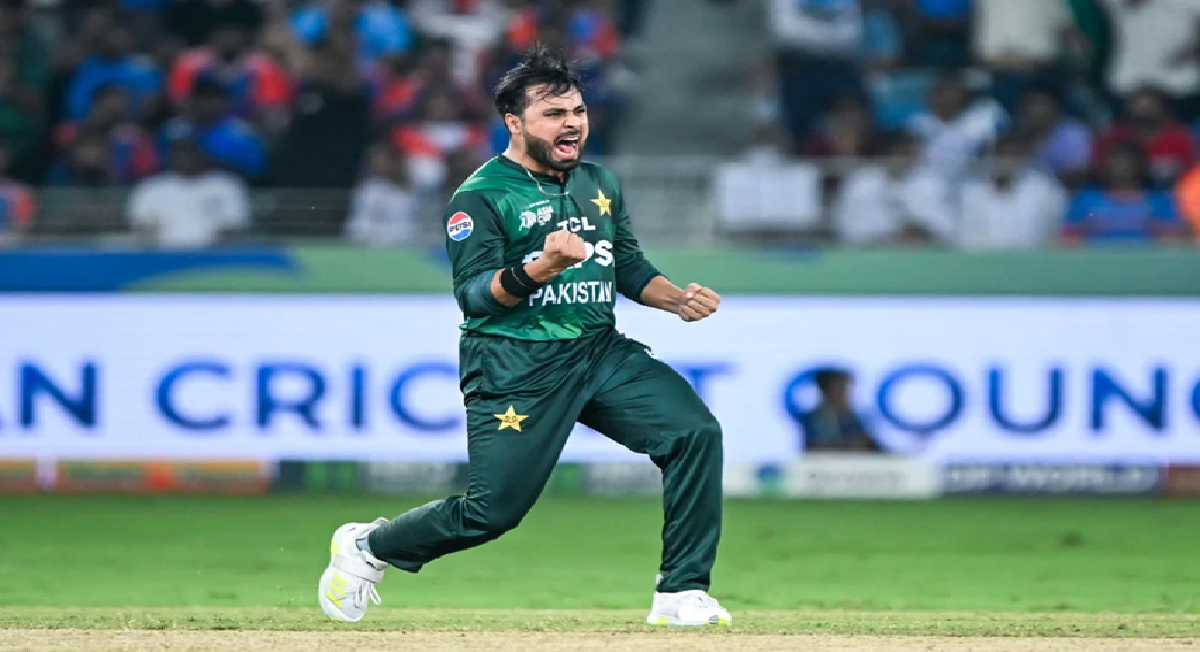
Faheem Ashraf Rescues Pakistan in a Chaotic Start to T20 World Cup Campaign Against Netherlands
Pakistan’s opening match of the T20 World Cup was supposed to be routine. Against a spirited but less-fancied Netherlands side, the expectation was of a comfortable victory — a strong statement of intent from one of the tournament favourites. Instead, Pakistan found themselves dragged into chaos, tension, and near embarrassment before an extraordinary late cameo from Faheem Ashraf restored order and saved them from a stunning upset.
What followed was a reminder of Pakistan cricket’s unpredictable nature — the very quality that has made the team both feared and frustrating across generations. From cruising early to collapsing in the middle overs and then clawing their way back through last-over heroics, Pakistan delivered a full-spectrum drama in their very first match of the tournament.
This was not just a win; it was a survival story — one that Pakistan will hope remains a lesson rather than a recurring theme as the World Cup unfolds.
A Tournament Begins with Chaos Instead of Comfort
The build-up to this T20 World Cup had been unusual. Teams arrived with limited preparation, unfamiliar conditions, and evolving combinations. Yet few expected Pakistan’s campaign to begin with the kind of nerve-wracking contest that unfolded in this encounter. Against the Netherlands — a team admired for its discipline and development but not typically considered a threat to elite sides — Pakistan were expected to cruise.
Instead, they were pushed to the brink.
Chasing a modest target of 148, Pakistan needed 29 runs from the final two overs — the most they have ever required and successfully achieved in the closing phase of a T20 international chase. That statistic alone reveals how far the match had drifted from expectations. What should have been a steady pursuit turned into a test of temperament, nerve, and late-order batting ability.
At the center of Pakistan’s escape was Faheem Ashraf, whose unbeaten 29 off just 11 balls flipped the match in the blink of an eye. His innings was not merely impactful — it was transformational, rescuing Pakistan from a situation where defeat looked increasingly likely.
Netherlands Set a Competitive but Incomplete Total
Earlier in the day, Netherlands were asked to bat first after Pakistan won the toss. On a surface that offered grip and variable bounce, runs were not expected to flow freely. Yet Netherlands approached their innings with intent and composure, aware that anything below par would leave them vulnerable against Pakistan’s powerful batting lineup.
Michael Levitt announced that intent immediately, striking a boundary off the very first ball of the innings. His aggressive approach set the tone, though both openers fell inside the PowerPlay. Despite losing wickets, Netherlands reached 50 within the first six overs — a solid start that kept them on course for a competitive total.
However, once Pakistan’s spinners entered the attack, the innings lost momentum.
Abrar Ahmed’s Game-Changing Spell
Abrar Ahmed, Pakistan’s mystery spinner, proved the turning point in the Netherlands innings. Bowling with sharp drift and subtle variations, he struck immediately by having Colin Ackermann chop on in his first over. That breakthrough slowed Netherlands’ scoring and introduced hesitation into their batting approach.
From that point onward, Netherlands struggled to accelerate. Pakistan’s spinners tightened the screws, conceding very few boundary opportunities and forcing batters to take risks against well-set fields.
Captain Scott Edwards attempted to stabilize the innings through a series of short but useful partnerships. Calm and composed, he rotated strike effectively and punished loose deliveries. His 29-ball 37 became the backbone of Netherlands’ innings, but without significant support from the other end, it proved insufficient to propel the team toward a truly competitive score.
Collapse at the Death
Just when Netherlands looked poised to finish strongly, Pakistan struck again. Edwards fell in the 16th over while attempting to force the pace against Abrar — a dismissal that triggered a collapse. Saim Ayub then removed Logan van Beek and Zach Lion Cachet in quick succession, reducing Netherlands from 127 for 4 to 137 for 7.
From there, the innings unraveled. Mohammad Nawaz picked up two wickets, while Salman Mirza wrapped things up with an impressive final over, finishing with figures of 3 for 24. Netherlands were bowled out for 147 in 19.5 overs — a score that felt slightly under par but not insignificant, especially given Pakistan’s vulnerability to pressure in chases.
Despite falling short of a stronger finish, Netherlands could take pride in their disciplined batting effort and the fight they showed throughout the innings. Still, they would later regret not pushing beyond 160, as those missing runs might have changed the outcome entirely.
Pakistan’s Chase Begins Smoothly
Pakistan’s reply began with confidence and fluency. Openers Sahibzada Farhan and Saim Ayub wasted no time, racing to 27 in the first two overs. Their positive intent immediately eased any early nerves and suggested Pakistan were intent on finishing the chase efficiently.
Even after Aryan Dutt struck twice in the PowerPlay — removing Ayub and captain Salman Ali Agha — Farhan continued to find boundaries. Pakistan reached 61 for 2 after six overs, comfortably ahead of the required rate and firmly in control of proceedings.
At this stage, the contest appeared straightforward. The run rate was manageable, wickets were in hand, and Pakistan’s experienced middle order remained to come. Netherlands were competitive but not dominant. The match seemed destined to follow the script.
That illusion, however, was about to shatter.
Middle-Overs Collapse: The Turning Point
Farhan then combined with Babar Azam in a steady 45-run partnership for the third wicket, guiding Pakistan toward the halfway mark without alarm. Although Babar took time to settle — requiring 15 balls to find his first boundary — his presence offered reassurance. With Pakistan cruising, Netherlands desperately needed breakthroughs.
They found them — dramatically.
Van Meekeren’s Double-Wicket Maiden
The 11th over proved pivotal. Paul van Meekeren delivered a double-wicket maiden that swung the momentum decisively. Farhan, who had looked comfortable throughout his 47-run knock, was caught in the deep by Roelof van der Merwe. On the very next delivery, Usman Khan chopped on, leaving Pakistan suddenly wobbling.
Shortly after, Babar attempted to break the shackles by hitting over the top but holed out to long-off. Within the space of a few overs, Pakistan went from comfortable to vulnerable — losing three crucial wickets and surrendering control of the chase.
What followed was a textbook example of pressure cricket.
Netherlands Tighten the Noose
With wickets falling, Netherlands’ bowlers grew in confidence. Van Meekeren and Aryan Dutt bowled successive tight overs, refusing to offer width or pace. Dot balls mounted, and the required run rate climbed rapidly.
Kyle Klein then removed Mohammad Nawaz with a slower delivery that induced a mistimed pull, and the very next ball saw Shadab Khan strangled down the leg side by Logan van Beek. Suddenly, Pakistan were six down, the pressure was immense, and Netherlands sensed a historic upset.
At this point, Pakistan’s chase was in freefall. The scoreboard read an alarming figure: 23 runs needed from 10 balls with only two wickets remaining. Momentum was entirely with Netherlands, whose fielding and bowling intensity had surged at precisely the right time.
The match was poised on a knife edge.
The Moment That Changed Everything: O’Dowd’s Missed Catch
In tight matches, moments matter — and this contest turned on a single lapse.
With Pakistan desperate, Faheem Ashraf mistimed a lofted shot early in his innings, offering Max O’Dowd a straightforward catch in the deep. The ball hung in the air long enough for the crowd to hold its breath. O’Dowd moved into position, but the chance slipped through his hands.
At that moment, Pakistan were eight down with 23 required off 10 balls. Had the catch been taken, Netherlands would have been overwhelming favourites, with only tailenders left and a manageable target to defend.
Instead, Faheem was reprieved — and he made Netherlands pay in the most emphatic way possible.
Faheem Ashraf’s Stunning Counterattack
What followed was a breathtaking shift in momentum.
Having survived the dropped catch, Faheem unleashed a furious assault on the bowling. In the remainder of that over alone, he smashed two sixes and a boundary, completely changing the complexion of the chase. The required run rate plummeted, the fielding side lost its composure, and belief surged back into Pakistan’s camp.
Faheem’s innings — 29 not out from just 11 balls — was not built on reckless hitting but on calculated aggression. He targeted the shorter boundaries, anticipated variations, and backed his power to clear the ropes under pressure. Each strike seemed to drain confidence from Netherlands and restore Pakistan’s control.
By the time the final over arrived, the equation had tilted decisively. What moments earlier looked like an inevitable upset now felt like Pakistan’s game to lose — and they did not squander the opportunity.
Pakistan crossed the line with three wickets in hand and three balls to spare, sealing a dramatic victory that will be remembered more for its chaos than its comfort.
Why Netherlands Deserved Better
While Pakistan celebrated survival, Netherlands were left to rue missed opportunities.
From disciplined bowling spells to sharp fielding and intelligent use of slower deliveries, they executed much of their plan to near perfection. Van Meekeren’s double-wicket maiden, Dutt’s tight PowerPlay overs, and Klein’s crucial breakthrough all demonstrated the growth and maturity of the Dutch side in international cricket.
But T20 matches often hinge on moments rather than sustained phases, and Netherlands were undone by a single misjudgment — O’Dowd’s dropped catch. That moment, compounded by a few loose deliveries in the closing overs, swung a nearly-won contest into defeat.
Still, this performance reaffirmed Netherlands’ reputation as one of the most competitive associate teams in world cricket. They did not simply participate; they challenged, dominated phases, and exposed vulnerabilities in one of the game’s elite sides.
Had they held their nerve for just a few more deliveries, they could have recorded one of the biggest upsets in T20 World Cup history.
Pakistan’s Familiar Pattern: Talent Meets Turbulence
For Pakistan, this match was a reminder of both their brilliance and their fragility — qualities that have defined their cricketing identity for decades.
On one hand, they showed resilience. Faheem Ashraf’s composure under extreme pressure and the team’s ability to recover from a near-collapse highlighted depth, adaptability, and mental strength.
On the other hand, their middle-order implosion raised serious questions.
After cruising at 61 for 2 in the PowerPlay and building a stable third-wicket partnership, Pakistan lost five wickets for just 30 runs. Poor shot selection, difficulty rotating strike, and vulnerability to slower deliveries all resurfaced — familiar flaws that have haunted Pakistan in recent ICC tournaments.
Babar Azam’s slow start, though understandable given the pressure, also added to the squeeze. In modern T20 cricket, dot balls are often more damaging than wickets, and Pakistan’s middle overs were plagued by stagnation.
If not for Faheem’s late heroics, Pakistan might have suffered a shock defeat that would have severely complicated their tournament campaign.
Fielding Excellence Softens the Blow
While Pakistan’s batting nearly cost them the match, their fielding excellence earlier in the game deserves recognition.
Sharp catches from Salman Ali Agha and Sahibzada Farhan helped restrict Netherlands’ scoring, while a superb relay effort involving Babar Azam and Shaheen Afridi prevented valuable boundary runs. These moments ensured Netherlands remained below the 150 mark — a crucial factor in Pakistan’s eventual escape.
Fielding remains one of Pakistan’s underrated strengths, particularly in high-pressure ICC events, and this match reaffirmed its importance in tight contests.
Faheem Ashraf: From Supporting Role to Match-Winner
Faheem Ashraf’s innings will stand as one of the defining moments of Pakistan’s early tournament campaign.
Often viewed as a utility all-rounder rather than a frontline match-winner, Faheem showcased composure, power, and tactical awareness under immense pressure. His clean striking against quality bowling in a do-or-die situation reflected not only technical skill but mental toughness — the kind that wins knockout matches.
His ability to remain calm after being dropped, reset mentally, and then dominate the bowling underlined his value as a lower-order finisher. For Pakistan, who have long struggled to find consistency in that role, Faheem’s performance could prove pivotal as the tournament progresses.
It was not just a cameo — it was a statement.
What This Match Means for Pakistan’s Campaign
While Pakistan secured two crucial points, this performance served more as a warning than a confidence boost.
Against stronger opposition, such collapses are unlikely to be forgiven. Teams like England, Australia, and India possess the bowling depth and composure to close out matches when in winning positions. Pakistan will need to tighten their middle-order approach, improve strike rotation, and reduce their vulnerability to slower deliveries if they are to mount a serious title challenge.
At the same time, the match reinforced Pakistan’s resilience — a trait that has powered many of their greatest tournament comebacks. Winning ugly, especially early in a competition, can sometimes galvanize a team and sharpen focus for future encounters.
Pakistan will hope this scare becomes a catalyst for improvement rather than a sign of deeper structural issues.
Netherlands’ Growing Reputation in World Cricket
For Netherlands, this match — despite ending in defeat — marked another significant step in their journey as a competitive force in international cricket.
They did not merely survive against a heavyweight; they outplayed Pakistan for large portions of the game. Their bowlers showed control, discipline, and tactical intelligence, while their batters demonstrated composure against high-quality spin and pace.
What separated them from victory was not ability but experience — the fine margins that often distinguish established teams from emerging ones. Closing out tight games requires not just skill but repetition under pressure, something Netherlands are steadily accumulating through consistent appearances in major tournaments.
If they continue to perform at this level, landmark wins against full-member nations may not be far away.
Match Summary
Netherlands were bowled out for 147 in 19.5 overs, with Scott Edwards top-scoring with 37 and Salman Mirza returning impressive figures of 3 for 24.
Pakistan chased down the target with 148 for 7 in 19.3 overs, powered by Sahibzada Farhan’s fluent 47 and Faheem Ashraf’s explosive 29 not out. Paul van Meekeren was the pick of the Netherlands bowlers with figures of 2 for 20.
Pakistan won by three wickets.
Conclusion: A Narrow Escape That Will Be Remembered
Pakistan’s victory over Netherlands was anything but routine. It was messy, dramatic, nerve-wracking — and ultimately triumphant. What should have been a comfortable start to their T20 World Cup campaign turned into a near disaster, rescued only by Faheem Ashraf’s late brilliance and a crucial fielding lapse from the opposition.
For fans, the match delivered entertainment and emotion in abundance. For Pakistan’s management, it delivered lessons — about composure, middle-order stability, and the importance of finishing games efficiently. For Netherlands, it delivered belief — proof that they can compete with and nearly defeat the best teams in the world.
In tournament cricket, early matches often set the tone. Pakistan will hope this one becomes a turning point toward greater discipline and consistency. Netherlands will take heart from a performance that deserved more than it got.
One thing is certain: this match reminded everyone why cricket, and especially T20 cricket, remains one of the most unpredictable and thrilling sports on the planet — where fortunes can swing in a single over, a single shot, or even a single dropped catch.