Brazil Air Travel Chaos Deepens with 177 Delayed Flights and 26 Cancellations at São Paulo Airport
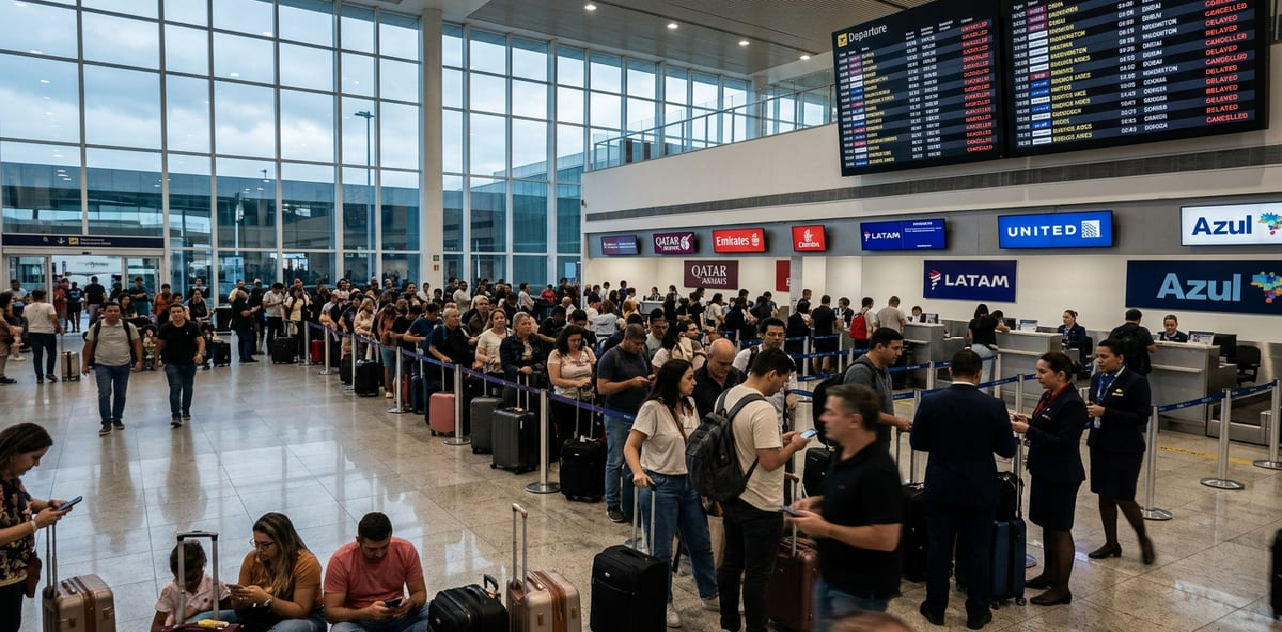
Brazil Aviation Network Hit by Massive Travel Chaos as São Paulo Airports Record 177 Delays and 26 Flight Cancellations
Severe Operational Disruptions Trigger Nationwide Travel Crisis
Brazil's aviation sector experienced significant disruption on June 20, 2026, after operational challenges at major airports in São Paulo triggered a wave of flight delays and cancellations across the country. According to reported aviation data, a total of 177 flights were delayed while 26 flights were cancelled nationwide, creating widespread inconvenience for thousands of passengers and exposing vulnerabilities within one of South America's busiest air transportation networks.
The disruptions were concentrated primarily in the São Paulo metropolitan region, where three of Brazil's most important airports—São Paulo–Congonhas Airport, São Paulo–Guarulhos International Airport, and Viracopos International Airport—faced severe operational pressure. The resulting congestion quickly spread through domestic and international routes, affecting major airlines including LATAM Brasil, Azul Brazilian Airlines, and GOL Linhas Aéreas.
As passengers struggled with delayed departures, missed connections, and uncertain travel schedules, the incident highlighted the challenges faced by Brazil's aviation infrastructure during periods of heavy demand and operational strain.
São Paulo Remains the Heart of Brazil's Aviation Network
São Paulo plays a critical role in Brazil's air transportation system. The city serves as the country's primary aviation hub, connecting domestic destinations with major international markets across North America, Europe, Asia, and Latin America.
Each of the city's major airports serves a distinct purpose:
Congonhas Airport handles a large volume of domestic business travel and shuttle services.
Guarulhos International Airport acts as Brazil's primary international gateway.
Viracopos International Airport supports both passenger traffic and cargo operations.
Because these airports collectively handle millions of passengers annually, any disruption affecting one facility can rapidly impact airline schedules throughout the country. When operational challenges occur simultaneously at all three airports, the consequences can extend far beyond the São Paulo region.
Industry observers noted that the June 20 disruptions demonstrated how interconnected the aviation network has become. Delays at one airport resulted in aircraft arriving late at subsequent destinations, creating a chain reaction that affected flight schedules nationwide.
Flight Delays and Cancellations Reach Significant Levels
Official disruption data revealed the scale of the operational difficulties faced by airlines and airports.
Across Brazil, aviation authorities and airline operators recorded:
177 delayed flights
26 cancelled flights
The majority of these disruptions occurred within the São Paulo metropolitan airport system.
Airport-Wise Impact
São Paulo–Congonhas Airport
Delayed Flights: 69
Cancelled Flights: 6
Congonhas recorded the highest number of delayed operations. As one of Brazil's busiest domestic airports, even minor scheduling disruptions can quickly accumulate due to limited turnaround times and high flight frequency.
São Paulo–Guarulhos International Airport
Delayed Flights: 57
Cancelled Flights: 10
Guarulhos experienced the largest number of cancellations. The airport's role as Brazil's principal international gateway meant that disruptions affected both domestic travelers and international passengers connecting to destinations around the world.
Viracopos International Airport
Delayed Flights: 28
Cancelled Flights: 6
Viracopos also experienced significant operational difficulties, particularly affecting low-cost and regional airline operations.
Tancredo Neves International Airport (Belo Horizonte)
Delayed Flights: 18
Cancelled Flights: 1
The disruptions extended beyond São Paulo, impacting important regional airports such as Belo Horizonte.
Porto Seguro Airport
Delayed Flights: 5
Cancelled Flights: 3
Although smaller in scale, disruptions at Porto Seguro affected tourism traffic along Brazil's popular coastal region.
Major Airlines Face Network-Wide Challenges
Brazil's three largest airlines were all affected by the disruptions.
LATAM Brasil
LATAM Brasil recorded:
9 cancelled flights
54 delayed flights
As one of the country's largest carriers, LATAM's extensive domestic and international network experienced considerable operational pressure.
Azul Brazilian Airlines
Azul reported:
9 cancelled flights
54 delayed flights
The airline's strong presence at Viracopos made it particularly vulnerable to operational issues originating within the São Paulo airport system.
GOL Linhas Aéreas
GOL experienced:
5 cancelled flights
61 delayed flights
Although GOL recorded fewer cancellations, it experienced the highest number of delays among the major carriers.
Industry analysts pointed out that the disruption rates were relatively similar across all three airlines. This suggests that the challenges were primarily related to airport and airspace operations rather than airline-specific issues.
Why Did the Disruptions Spread So Quickly?
Aviation experts explain that modern airline operations depend heavily on tightly coordinated schedules.
Aircraft often operate multiple routes throughout a single day. When one flight is delayed, the aircraft may arrive late for its next assignment. Crews, maintenance schedules, gate availability, and passenger connections are all affected.
Several factors likely contributed to the disruption:
Airport Congestion
Major airports frequently operate close to capacity during peak travel periods. Any slowdown in departures or arrivals can create bottlenecks that quickly spread throughout the network.
Limited Gate Availability
When arriving aircraft cannot access gates on time, subsequent flights may be delayed while waiting for parking positions.
Air Traffic Management Constraints
Heavy traffic volumes can force air traffic controllers to implement departure restrictions and arrival spacing measures, resulting in additional delays.
Aircraft Rotation Delays
A delayed aircraft may impact multiple future flights scheduled for that aircraft during the day.
Together, these factors create a cascading effect that can transform localized disruptions into a nationwide operational challenge.
Passengers Face Long Waits and Missed Connections
For travelers, the operational disruptions created significant difficulties.
Many passengers reported extended waiting times, uncertain departure schedules, and missed connections. International travelers faced particular challenges because delays on domestic feeder flights often prevented them from reaching long-haul departures at Guarulhos International Airport.
Families traveling during holiday periods, business passengers attending important meetings, and tourists with pre-booked accommodations all experienced disruptions to their plans.
At heavily affected airports, customer service desks and airline support centers faced increased demand as travelers sought alternative itineraries and rebooking assistance.
The situation also created additional expenses for some passengers, including accommodation costs, transportation expenses, and missed reservations.
Impact on Tourism and Business Travel
Brazil's tourism industry relies heavily on efficient air connectivity.
Destinations such as Porto Seguro, Rio de Janeiro, Salvador, Brasília, and Belo Horizonte depend on regular flight schedules to support both domestic and international tourism.
Flight disruptions can lead to:
Missed hotel bookings
Cancelled tours and activities
Delayed business meetings
Reduced traveler confidence
Business travelers were also affected as schedule disruptions complicated corporate travel plans and increased travel uncertainty.
Because São Paulo functions as the primary connection point for many domestic and international journeys, disruptions there often have nationwide economic consequences.
Infrastructure Challenges Under Growing Demand
The June 20 disruption has renewed discussions about the future capacity of Brazil's aviation infrastructure.
Passenger traffic across Brazil has increased significantly in recent years as economic activity and travel demand continue to recover and expand.
While airports have invested in modernization projects, industry experts argue that continued growth will require:
Additional runway capacity
Expanded terminal facilities
Improved air traffic management systems
Greater operational flexibility during peak periods
Enhanced contingency planning
Without further infrastructure improvements, experts warn that similar disruptions could become more common as passenger numbers continue to rise.
Advice for Travelers During Major Flight Disruptions
Aviation experts recommend several practical steps for travelers affected by major airport disruptions.
Use Airline Mobile Applications
Passengers should monitor airline apps regularly for real-time updates regarding delays, cancellations, and rebooking options.
Rebook Quickly
Alternative seats often fill rapidly during large-scale disruptions. Travelers should act promptly when notified of cancellations.
Consider Alternate Airports
Passengers traveling within the São Paulo region may benefit from checking flights departing from Congonhas, Guarulhos, or Viracopos rather than relying on a single airport.
Allow Additional Connection Time
Travelers making international connections should schedule longer layovers to reduce the risk of missed flights.
Stay Informed
Flight status information should be verified frequently through official airline websites and flight-tracking platforms.
Industry Outlook Following the Disruption
The June 20 travel disruption serves as a reminder of the complexities involved in managing large aviation networks.
While airlines and airport operators worked to restore normal operations, the incident underscored the importance of infrastructure resilience, efficient air traffic management, and coordinated operational planning.
Industry analysts expect aviation authorities and airport operators to review the causes of the disruptions and identify measures that can reduce the likelihood of similar events in the future.
As passenger demand continues to grow across Brazil and South America, maintaining reliable airport operations will remain a critical priority for airlines, regulators, and airport authorities alike.
Conclusion
The severe travel disruptions that swept across Brazil's aviation network on June 20, 2026, resulted in 177 flight delays and 26 cancellations, creating widespread inconvenience for passengers and exposing vulnerabilities within the country's interconnected air transportation system.
With São Paulo's Congonhas, Guarulhos, and Viracopos airports at the center of the crisis, the operational breakdown quickly spread across domestic and international routes, affecting major airlines including LATAM Brasil, Azul Brazilian Airlines, and GOL Linhas Aéreas.
Although operations gradually recovered, the incident highlighted the growing pressure on Brazil's aviation infrastructure and the need for continued investment in airport capacity, operational efficiency, and contingency planning. For travelers, the disruption reinforced the importance of flexibility, proactive planning, and staying informed during periods of network-wide operational challenges.