Asrani Dies At 84: From 'Hum Angrezon Ke Zamane Ke Jailer' To 'Pappaji Bol', 10 Memorable Dialogues That Defined The Legendary Actor
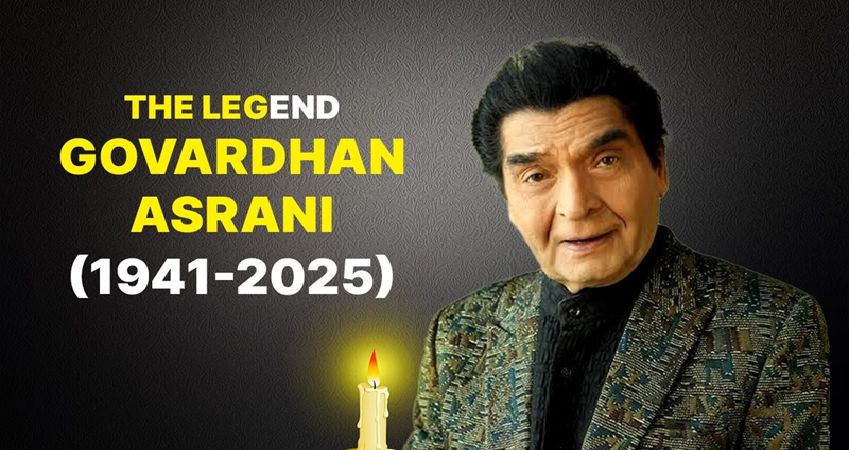
Asrani Passes Away at 84: Remembering the Legendary Comedian Who Made India Laugh for Five Decades
Mumbai, October 20: Veteran Bollywood actor Govardhan Asrani, fondly known as Asrani, passed away on Monday at the age of 84 in Mumbai. The iconic actor, whose comic brilliance shaped generations of Hindi cinema, breathed his last following age-related health issues.
His last rites were performed at Santacruz Crematorium, where close family members and friends gathered to bid him farewell. The private ceremony was held as per the actor’s wishes, marking the end of an era in Indian comedy.
For over five decades, Asrani brought laughter and warmth to the big screen. From his unforgettable role as the eccentric jailer in Sholay to his hilarious turns in Chupke Chupke, Dhamaal, and Aaj Ki Taaza Khabar, he remained one of the most loved and recognizable faces in Hindi cinema.
A Life Devoted to Laughter
Born in Jaipur, Rajasthan, in 1941, Asrani hailed from a modest Sindhi family. His journey from the pink city to the heart of Bollywood is a story of perseverance, talent, and timing. After completing his schooling at St. Xavier’s School, he graduated from Rajasthan College and briefly worked as a voice artist for All India Radio.
His passion for acting led him to the Film and Television Institute of India (FTII), Pune, where he trained in the early 1960s. At a time when comedians were often typecast into caricatures, Asrani envisioned humor that came from realism and personality.
After graduation, he shifted to Mumbai in search of work. Like many aspiring actors, he faced his share of rejections before finally landing small roles. His early appearances in films like Hare Kanch Ki Chooriyan (1967) and Satyakam (1969) caught the attention of filmmakers for his expressive face and comic flair.
Breakthrough with Hrishikesh Mukherjee and the Rise to Stardom
Asrani’s big break came when Hrishikesh Mukherjee cast him in Guddi (1971), starring Jaya Bhaduri. His natural acting and subtle humor won him praise, opening doors to more substantial roles.
The 1970s saw Asrani rise to prominence as one of Bollywood’s most bankable comedians. He became a regular in Hrishikesh Mukherjee’s and Basu Chatterjee’s films, which portrayed middle-class life with relatable humor.
Films like Bawarchi (1972), Chupke Chupke (1975), Rajnigandha, and Abhimaan showcased his effortless ability to blend with ensemble casts. But his career-defining moment came in Ramesh Sippy’s Sholay (1975), where his portrayal of a bumbling, self-important jailer became legendary.
The ‘Jailer’ Who Became a National Sensation
Even among Sholay’s towering characters — Gabbar Singh, Jai-Veeru, and Thakur — Asrani’s brief role as the “Angrezon ke zamaane ke jailer” stood out. His exaggerated British-era mannerisms, high-pitched delivery, and comic timing turned the part into an immortal piece of Hindi film history.
His line, “Hum Angrezon ke zamaane ke jailer hain!”, continues to be quoted, mimicked, and celebrated nearly fifty years later.
The role also redefined comic relief in Indian cinema — Asrani’s humor didn’t mock others; it drew laughter from his character’s misplaced pride and innocence.
The Versatile Performer Beyond Comedy
While remembered primarily for his comedic brilliance, Asrani’s range extended far beyond laughter. He portrayed serious and emotional roles with equal depth in films such as Koshish, Namak Haraam, and Mehbooba.
He also turned director with Chala Murari Hero Banne (1977), a semi-autobiographical film that reflected his real-life struggles as an actor. The movie, starring himself in the lead, received positive reviews for its honest storytelling and catchy music.
In the 1980s and 1990s, Asrani became a fixture in family entertainers. From Jo Jeeta Wohi Sikandar to Hera Pheri, Dhamaal, and Hulchul, he adapted seamlessly to new generations of audiences.
Collaborations and Friendship with Rajesh Khanna
One of the most remarkable aspects of Asrani’s career was his long-standing collaboration with Rajesh Khanna, India’s first superstar. The two shared the screen in over 25 films, including Bawarchi, Amar Prem, Namak Haraam, and Aap Ki Kasam.
In interviews, Asrani often referred to Khanna as his mentor and close friend. Their pairing was beloved for its emotional and comedic balance — Khanna’s charm complemented Asrani’s wit perfectly.
He once said in an interview, “Rajesh Khanna believed in me when I was nobody. He taught me that comedy should always serve the story, not overshadow it.”
Comic Timing That Defined Generations
Asrani’s success was rooted in his understanding that comedy was an art of rhythm, not exaggeration. His dialogue delivery, tone modulation, and expressive eyes made even the simplest line memorable.
He could switch from confusion to confidence within seconds, making his performances layered yet relatable. His style influenced future generations of comedians including Johnny Lever, Rajpal Yadav, and Paresh Rawal, all of whom have credited him as an inspiration.
He once famously said, “Comedy is the most serious business in cinema. If you laugh too hard, it becomes noise; if you act too seriously, it loses charm.”
Tributes Pour In from Across the Industry
As news of his passing broke, tributes poured in from across the Indian film fraternity.
Amitabh Bachchan, his co-star in several classics, posted on social media:
“Deeply saddened by Asrani ji’s passing. A true legend of laughter. His timing was unmatched and his humility exemplary.”
Hema Malini shared, “Worked with him in many films — such a gentle, kind soul. His characters always brought warmth to every frame.”
Anupam Kher tweeted, “End of an era. Asrani ji was not just a comedian — he was a performer par excellence. His contribution to Indian cinema will never be forgotten.”
Fans too expressed grief online, recalling their favorite scenes and dialogues. The line “Aadhe idhar jao, aadhe udhar jao, baaki mere peeche aao!” trended across platforms as a nostalgic tribute.
His Most Iconic Dialogues That Still Resonate
To celebrate his legacy, here’s a look back at ten of Asrani’s most iconic dialogues that continue to bring smiles:
- “Hum Angrezon ke zamaane ke jailer hain!” (Sholay)
- “Aadhe idhar jao, aadhe udhar jao, baaki mere peeche aao.” (Sholay)
- “Pappaji bol, haraamkhor!” (Dhamaal)
- “Are bhai, aise kaise ho sakta hai?” (Dhamaal)
- “Paison ka intezaam ho gaya hai?” (Chala Murari Hero Banne)
- “Maaf kar dijiye, ab hum nahi badlenge.” (Aaj Ki Taaza Khabar)
- “Meri Phoolmati us nakli Vanaspati ki god mein!” (Aaj Ki Taaza Khabar)
- “Jawani mein hum bahut pehalwan hua karte the.” (Sholay)
- “Juice, kanjoos, ullu ka pattha, jala hua karela, gala hua kela!” (Pati Patni Aur Woh)
- “Main comedian nahi hoon, main actor hoon!” (Interview Quote)
Each of these lines captured a different shade of his humor — from slapstick to satire, from emotional comedy to wordplay.
Recognition and Awards
Asrani’s contribution was acknowledged with multiple Filmfare Awards and Lifetime Achievement honors. He received the Filmfare Award for Best Comedian for Aaj Ki Taaza Khabar (1973) and Balika Badhu (1977).
He also received the IIFA Lifetime Achievement Award and several state honors for his outstanding contribution to Indian cinema.
Even in his later years, he continued to act in films and television shows, appearing in Bhool Bhulaiyaa 2 and All Is Well. His performances remained effortless, reminding audiences of the golden era of Bollywood.
Personal Life and Modesty
Off-screen, Asrani was known for his simplicity and humility. He lived a quiet life with his wife, actress Manju Asrani, and their son. The couple often appeared together in films and stage performances.
He was known for mentoring young artists, often sharing insights on comic timing and character building. Despite decades of fame, he remained grounded and approachable.
End of an Era
Asrani’s passing marks not just the loss of an actor but of a generation that valued clean, intelligent comedy. His humor was never mean-spirited — it came from observation, human flaws, and warmth.
He bridged the gap between the black-and-white era and modern cinema, evolving with every decade while staying true to his roots. His films continue to air on television, making new audiences laugh — a testament to his timeless appeal.
Final Goodbye
As his mortal remains were consigned to flames at the Santacruz Crematorium, Mumbai bid farewell to one of its brightest stars. The industry that he once made laugh now weeps for its loss.
In a statement, his family said:
“Asrani ji gave Indian cinema a new identity — one of laughter, decency, and love. His art will live forever in our hearts.”
Legacy Lives On
Even after five decades, Asrani’s performances remain benchmarks for aspiring actors. He showed that humor could be crafted with intelligence, empathy, and precision.
Every time his lines echo in a living room, every time someone mimics his jailer accent, his spirit returns — smiling, proud, eternal.
Asrani may have left the stage, but the laughter he created will never fade.
Related Posts