Students Protest After St Stephen’s College Bans Shorts
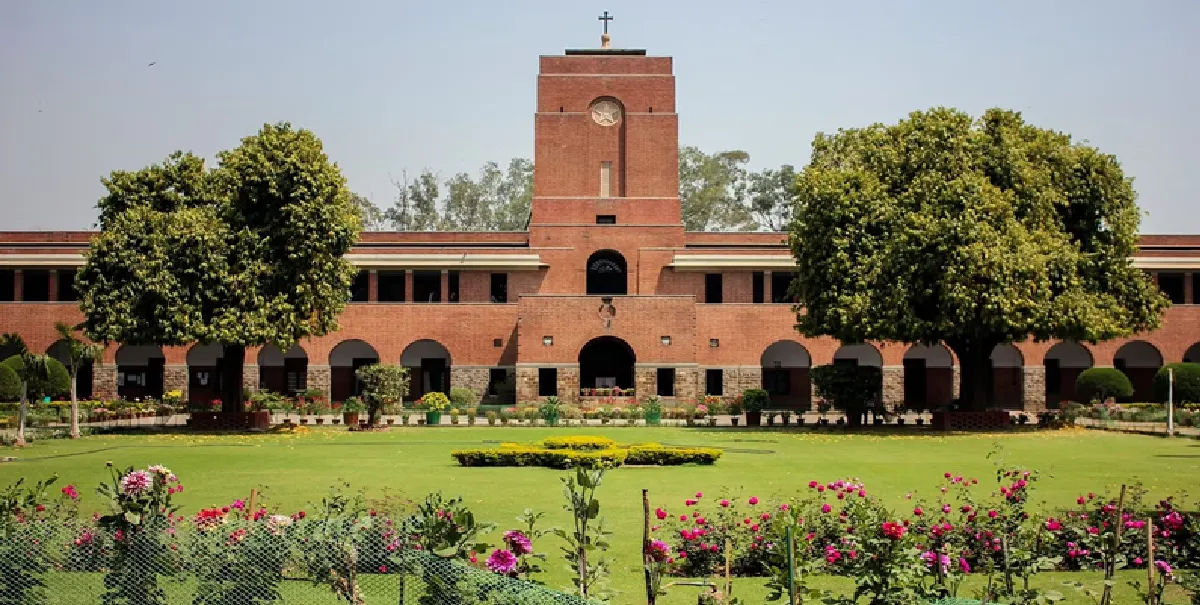
St Stephen’s College Shorts Ban Sparks Student Protests and Dress Code Debate
The new academic session at Delhi University’s St Stephen’s College has begun amid controversy after the administration prohibited students from wearing shorts in several academic and common areas of the campus. The decision led to protests on the first day of the session, with several students deliberately arriving at the college in shorts to express their opposition to the restriction.
The controversy centres on a written notice dated July 26, 2026, titled “Campus Regulations & Guidelines.” The notice was signed by the college’s principal, Professor Susan Elias, and instructed all students—traditionally referred to by the college as “junior members”—to strictly follow the prescribed campus regulations.
Under the new guidelines, students are prohibited from wearing shorts in classrooms, tutorial rooms, laboratories, the chapel, assembly hall, library and dining hall. The college has not yet publicly explained why it decided to formally introduce the restriction or whether any punishment will be imposed on students who violate it.
Students Protest on First Day of Academic Session
The restriction immediately drew opposition from students. On the first day of the new academic session, several students reportedly entered the college wearing shorts as a symbolic protest against the administration’s decision.
For many students, the issue is not simply about one type of clothing. They see the notice as part of a larger debate about personal freedom, institutional authority and the extent to which a college can regulate the appearance of adult students.
Students opposing the decision have argued that their choice of clothing should remain a personal matter as long as it does not interfere with teaching, safety or the rights of others. Several students described the restriction as a form of “moral policing” and an unnecessary intrusion into their personal choices.
Their main argument is that a college should primarily focus on academic standards, teaching quality, student welfare and the overall campus environment. According to them, controlling whether students wear shorts does not directly contribute to better learning or discipline.
The visible protest on the first day also showed that the issue could become a continuing point of disagreement between students and the administration. Instead of quietly accepting the regulation, some students chose clothing itself as a means of demonstrating their dissatisfaction.
Notice Refers to All Students as “Junior Members”
The language used in the circular has also created some confusion. The notice instructs “all junior members” to follow the dress code. In St Stephen’s College terminology, however, the term can be used broadly for students rather than referring only to first-year or junior students.
Some students initially believed that the restriction might apply mainly to new entrants. However, senior students reportedly claimed that the rule was being treated as applicable to them as well.
The students’ position is that the restriction is not limited to first-year students and could potentially affect the entire student body. This has increased concern over how the regulation will be interpreted and enforced during the academic year.
The absence of a detailed clarification from the administration has added to the uncertainty. Students do not yet know whether the college will deny them access to classrooms or common facilities, issue warnings, or take disciplinary action for violating the restriction.
College Administration Has Not Explained the Decision
Although the notice clearly lists the places where shorts are prohibited, it reportedly does not provide a detailed reason for introducing the rule.
The college administration has not issued a public statement explaining whether the ban is intended to maintain formality, discipline, religious sensitivity or a particular understanding of appropriate campus clothing. Reports also stated that attempts to obtain a response from Principal Susan Elias had not received a reply at the time of publication.
This lack of explanation has become one of the students’ main concerns. They argue that rules affecting daily student life should be introduced transparently and after consultation with the people who will be required to follow them.
A clear explanation could have helped students understand the administration’s reasoning, even if they continued to disagree with it. Without such an explanation, the rule has been interpreted by critics as an attempt to control student behaviour without sufficient justification.
An Old Informal Practice Becomes a Written Rule
Students and faculty members familiar with the college have indicated that wearing shorts had been informally discouraged in certain areas for several years.
Students were reportedly advised to avoid shorts particularly near the dining hall and the principal’s office. However, the important difference is that the practice has now been converted into an explicit written regulation covering several major areas of the campus.
According to faculty members cited in reports, this appears to be the first time that the college has formally issued a notice specifically identifying shorts as prohibited clothing.
The conversion of an informal tradition into a written rule has changed the nature of the issue. Informal expectations may be followed flexibly and interpreted differently by students and teachers. A written notice, by comparison, carries greater institutional authority and creates the possibility of formal enforcement.
This is one reason why the reaction has been stronger than it may have been in previous years. Students are not only responding to an old campus convention; they are questioning the administration’s decision to formally regulate a specific garment.
College Rulebook Does Not Specifically Ban Shorts
Another major point raised by students is that the college rulebook reportedly requires students to dress modestly or decently but does not explicitly prohibit shorts or identify any particular garment as unacceptable.
This difference has raised questions about whether the latest circular introduces an entirely new rule or merely attempts to clarify an existing expectation.
General phrases such as “modest,” “dignified” or “decent” clothing can be interpreted differently by different people. What one person considers appropriate may be viewed differently by another, depending on cultural, social and personal values.
By specifically naming shorts, the new notice removes some of that flexibility but also creates a stronger basis for disagreement. Students opposing the rule argue that modesty should not be defined through a blanket ban on one form of clothing.
They also point out that shorts are commonly worn by young adults in universities, sports institutions and public spaces, especially during hot weather. Therefore, critics believe that simply wearing shorts should not automatically be treated as inappropriate or disrespectful.
Sports Students Report Practical Difficulties
The regulation may create particular problems for members of the college’s sports teams.
Students involved in sports often attend training sessions in the morning and wear official sports kits that include shorts. After practice, they may need to visit the dining hall, classrooms or other campus facilities without having enough time to change.
Some students claimed that players returning from practice had faced difficulties entering the dining hall in the past because they were wearing shorts.
Sports students argue that a blanket restriction fails to recognise the practical requirements of athletic activities. They believe that the administration should provide an exemption or create a separate arrangement for students wearing officially approved sports uniforms.
Without such an exemption, athletes could be required to carry additional clothing and change immediately after every practice session merely to access food or academic spaces. Students say this could create unnecessary inconvenience and negatively affect participation in sports.
A more practical policy, they argue, would distinguish between casual clothing and recognised sports kits rather than treating all shorts in the same manner.
Student Organisations Demand Withdrawal of Notice
The controversy has now moved beyond individual student protests. Student organisations have criticised the college’s decision and called for the notification to be withdrawn.
The National Students’ Union of India demanded that the administration reverse the dress code, hold discussions with students and respect their personal liberty. The organisation argued that educational institutions should promote independent thought rather than impose unnecessary restrictions on personal choices.
The Krantikari Yuva Sangathan also opposed the notification and asked the college to avoid moral policing.
Both organisations maintained that the college should withdraw the restriction and begin a dialogue with students before enforcing rules related to personal clothing.
The involvement of student organisations could give the dispute a wider political and institutional dimension. What began as a campus-level disagreement may now contribute to a broader discussion across Delhi University about dress codes and student rights.
Other Campus Regulations Included in Notice
The circular does not deal only with clothing. It also reportedly reiterates several other campus rules.
Students have been reminded that the college is a smoke-free zone and that violations may invite disciplinary action. They have also been asked to maintain cleanliness, use designated dustbins and carry valid identity cards while on campus.
These instructions are generally connected with safety, identification and the maintenance of shared spaces. However, the prohibition on shorts has attracted the greatest attention because it directly concerns personal appearance.
The difference is important. Rules against smoking are linked with public health and the safety of others, while requirements to carry identity cards are connected with campus security. A clothing restriction, however, is more strongly influenced by ideas of culture, tradition and acceptable behaviour.
For this reason, students believe the administration must provide a clearer justification for the dress code than it would for ordinary safety regulations.
Institutional Discipline Versus Personal Freedom
The dispute reflects a long-standing question faced by universities: How much authority should an institution have over the personal choices of adult students?
Supporters of formal dress standards may argue that colleges have the right to protect institutional traditions and maintain an atmosphere of dignity in classrooms, libraries, dining spaces and religious areas.
St Stephen’s College is an institution with a long history and a distinctive campus culture. Some members of the college community may believe that formal clothing contributes to discipline and respect for shared academic and religious spaces.
However, opponents say that discipline should be judged through attendance, academic conduct, respect for others and compliance with safety rules—not through a student’s decision to wear shorts.
They also argue that university students are adults who should be capable of making reasonable clothing choices without excessive supervision. From this perspective, strict dress rules may appear outdated and inconsistent with the openness expected in higher education.
The strongest solution may lie in consultation rather than confrontation. The administration could explain the reason behind the policy, define how it will be enforced and consider exemptions for sports participants. Students, in turn, could present their concerns through formal discussions rather than allowing the disagreement to become increasingly hostile.
Teachers Suggest Rule May Not Be Strictly Enforced
Some students have claimed that teachers indicated the notice might not be strictly implemented for the time being. A faculty member also reportedly said that, despite informal discouragement over the years, students had not generally been punished merely for wearing shorts.
This suggests that the practical effect of the notice may depend on how teachers, security personnel and administrators choose to enforce it.
A rule that exists only on paper may eventually lose significance. On the other hand, inconsistent enforcement can create further confusion, particularly if some students are stopped while others are allowed to enter restricted areas.
Students are therefore seeking clarity on whether the circular is advisory or compulsory. The use of strict language in the notice suggests a mandatory regulation, but reports of possible non-enforcement create uncertainty.
What Happens Next?
The next few days are likely to determine whether the controversy develops into a sustained student movement or is resolved through discussions.
The administration may issue a clarification, revise the notice, introduce exemptions or retain the rule without strict enforcement. Student organisations may continue demanding its withdrawal, while students could organise additional demonstrations if they feel their concerns are being ignored.
The dispute is no longer only about shorts. It has become a broader debate over student autonomy, institutional traditions, transparent decision-making and the meaning of discipline within a modern university.
For now, the written notification remains in place, but its actual impact is uncertain. Whether the college enforces the ban strictly or adopts a more flexible approach will become clear as the new academic session progresses.
The controversy also serves as a reminder that even rules that may appear minor to administrators can carry deeper significance for students. Clothing is closely linked with identity, comfort and personal expression. Consequently, decisions regulating it can quickly produce resistance when students feel that they have not been consulted.
A constructive dialogue between the administration and students could prevent the matter from escalating. A mutually acceptable policy would need to protect the dignity of academic and religious spaces while also recognising personal freedom, weather conditions and the practical needs of sports students.
Until such clarity emerges, the shorts ban is likely to remain one of the first major campus controversies of the new academic year at St Stephen’s College.
Tags:
Related Posts