Pakistan vs Namibia Weather Report: What If Rain Disrupts the T20 World Cup Clash
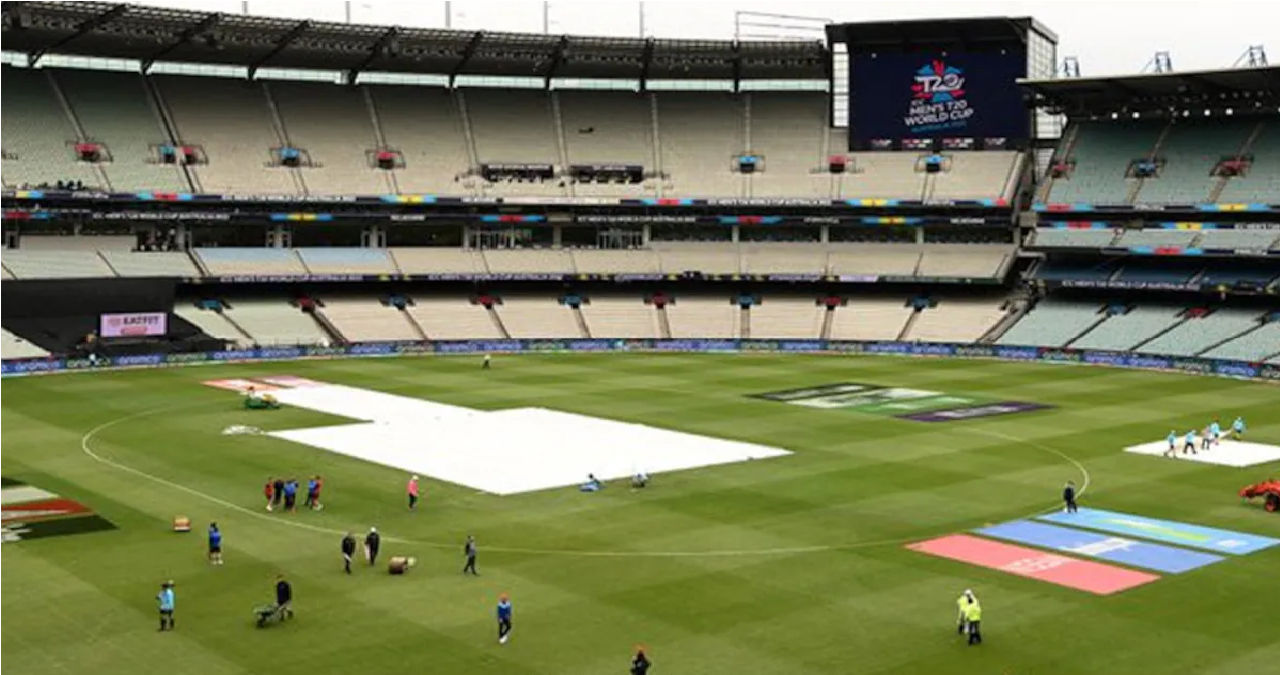
The Group A clash between Pakistan and Namibia in the ICC Men's T20 World Cup has turned into one of the most decisive fixtures of the tournament. Scheduled in Colombo under threatening skies, the match carries enormous significance for Pakistan’s campaign. After a heavy defeat to the India national cricket team, Pakistan now find themselves in a must-win situation to qualify for the Super 8s. However, weather forecasts predicting thunderstorms and consistent cloud cover have added another dramatic layer to the contest.
The biggest question now is not just whether Pakistan can defeat Namibia — but what happens if rain washes out the match completely?
Pakistan’s Campaign on the Brink
Pakistan entered the tournament as one of the strong contenders, but inconsistency has defined their journey so far. While they managed two victories earlier in the group stage, their 61-run loss against India severely dented their momentum and Net Run Rate (NRR).
Under captain Salman Ali Agha, the team has shown flashes of brilliance. The bowling unit has been effective in patches, but the batting lineup has struggled under scoreboard pressure. The defeat against India exposed vulnerabilities, particularly in chasing large totals.
That loss has made the final group game against Namibia a virtual knockout encounter.
Current Group A Standings Explained
As things stand, Group A looks like this:
- India – 3 wins, 6 points (Already qualified as group winners)
- United States of America – 2 wins, 4 points (NRR: 0.788)
- Pakistan – 2 wins, 4 points (NRR: -0.403)
- Netherlands – 1 win, 2 points
- Namibia – 0 points
India have sealed qualification and will progress to the Super 8s irrespective of other results. The second qualification spot remains undecided, and that’s where Pakistan’s fate hangs delicately.
Pakistan and USA are tied on 4 points, but USA have a significantly superior Net Run Rate. That means if both teams finish level on points, USA will go through.
The Straightforward Qualification Equation
Pakistan’s situation is mathematically simple:
- If Pakistan defeat Namibia – They qualify for the Super 8s.
- If Pakistan lose – USA qualify due to better Net Run Rate.
- If the match is washed out – Pakistan qualify with 5 points.
A washout would see both teams awarded one point each. That single point would take Pakistan to 5, placing them above USA’s 4 and securing second place in the group.
In this particular scenario, Net Run Rate would not matter because Pakistan would have more points.
What Happens in Case of Complete Washout?
If heavy rain prevents even the minimum required overs from being completed, the match will be declared a No Result (NR) under ICC playing conditions.
Here’s what that means:
- Both teams receive 1 point.
- Pakistan move to 5 points.
- USA remain on 4 points.
- Pakistan advance to the Super 8s as runners-up.
For Namibia, a washout would simply confirm their elimination, as they are already out of the qualification race.
Thus, ironically, rain could become Pakistan’s unlikely ally.
Why USA Need a Namibia Win
The United States still have a pathway to the Super 8s — but it depends entirely on Namibia pulling off an upset.
For USA to qualify:
- Pakistan must lose to Namibia.
If Namibia win, Pakistan remain stuck on 4 points. In that case, USA’s higher Net Run Rate (0.788 compared to Pakistan’s -0.403) would push them into the next round.
This makes the Pakistan vs Namibia clash critical not just for the two teams involved, but also for USA fans monitoring the result closely.
Colombo Weather Forecast: A Major Concern
Weather predictions for Colombo suggest challenging conditions. Reports indicate:
- Cloudy skies throughout the day
- Thunderstorms likely in the afternoon
- Around 67% chance of rain during match hours
- 55% probability of showers at night
Such conditions raise the possibility of interruptions, delays, and potentially a shortened game.
The ground staff in Colombo are experienced in handling rain disruptions, and modern drainage systems allow quick water clearance. However, persistent rainfall could still force officials to abandon the match.
Minimum Overs Required for a Result
According to ICC rules, a T20 match requires a minimum of five overs per side for a result to be declared.
If rain allows at least five overs per team:
- The match can proceed in shortened form.
- The Duckworth-Lewis-Stern (DLS) method will determine revised targets.
In reduced-over matches, strategy changes dramatically. Power-hitters become even more valuable, and bowlers must adapt quickly to revised field settings and pressure situations.
Shortened games often increase unpredictability — something Pakistan would want to avoid given the stakes.
Tactical Implications of a Rain-Shortened Match
If the match is reduced to, say, 10 overs per side:
- Teams may open with aggressive batters.
- Bowlers may complete their spells faster.
- Captains must make quick decisions.
For Pakistan, a rain-shortened match could either help or hurt. Their top order has struggled with consistency, but they possess explosive middle-order batters capable of accelerating rapidly.
Namibia, on the other hand, may embrace the unpredictability and attempt to surprise Pakistan with fearless cricket.
Psychological Pressure on Pakistan
Even though a washout mathematically benefits Pakistan, relying on rain is never ideal.
A team entering the Super 8s without winning its final group match may carry doubts about form and confidence. Pakistan would prefer to earn qualification convincingly on the field.
The defeat to India has already intensified scrutiny from fans and analysts. Another underwhelming performance could deepen concerns.
Captain Salman Ali Agha faces a significant leadership test. Managing nerves, keeping players focused despite weather uncertainty, and making strategic decisions under pressure will define his captaincy.
Namibia’s Motivation as Spoilers
Namibia may be eliminated from qualification contention, but they remain dangerous.
Teams with nothing to lose often play their best cricket. Namibia can:
- Attack freely with the bat.
- Experiment with bowling variations.
- Put Pakistan under early pressure.
In T20 cricket, momentum can shift in a matter of overs. A quick 50-run partnership or a couple of early wickets could dramatically alter the outcome.
Broader Tournament Impact
The Super 8 stage of the ICC Men's T20 World Cup 2026 promises tougher competition. Teams progressing must carry form and belief.
If Pakistan advance:
- They will join stronger sides in the next phase.
- Every weakness exposed in the group stage will be tested further.
Momentum becomes critical in global tournaments. A rain-assisted qualification may help them survive, but sustained performance improvement will be necessary to challenge top teams.
Fans Await Final Outcome
Cricket fans around the world are closely watching Colombo’s weather radar. Social media discussions are dominated by qualification permutations, rain probabilities, and match simulations.
Some supporters are hoping for a thrilling contest under clear skies. Others are calculating scenarios where rain secures Pakistan’s passage.
Such is the drama of tournament cricket — where fate sometimes lies beyond the boundary ropes.
Conclusion
The Pakistan vs Namibia match in the ICC Men's T20 World Cup 2026 has evolved into a high-stakes encounter shaped equally by cricketing performance and weather uncertainty.
Pakistan must ideally win to silence doubts and carry momentum into the Super 8s. However, if rain washes out the match, the tournament rules will favour them, granting qualification with five points.
For USA, the equation is clear: only a Pakistan defeat keeps their hopes alive.
As Colombo’s skies threaten interruption, the cricketing world waits. Whether decided by bat, ball, or rainfall, this Group A showdown will determine the next chapter of Pakistan’s World Cup journey.
Related Posts