India vs Zimbabwe 2nd T20 Live Score: Prince Yadav and Ravi Bishnoi Derail Zimbabwe’s Run Chase
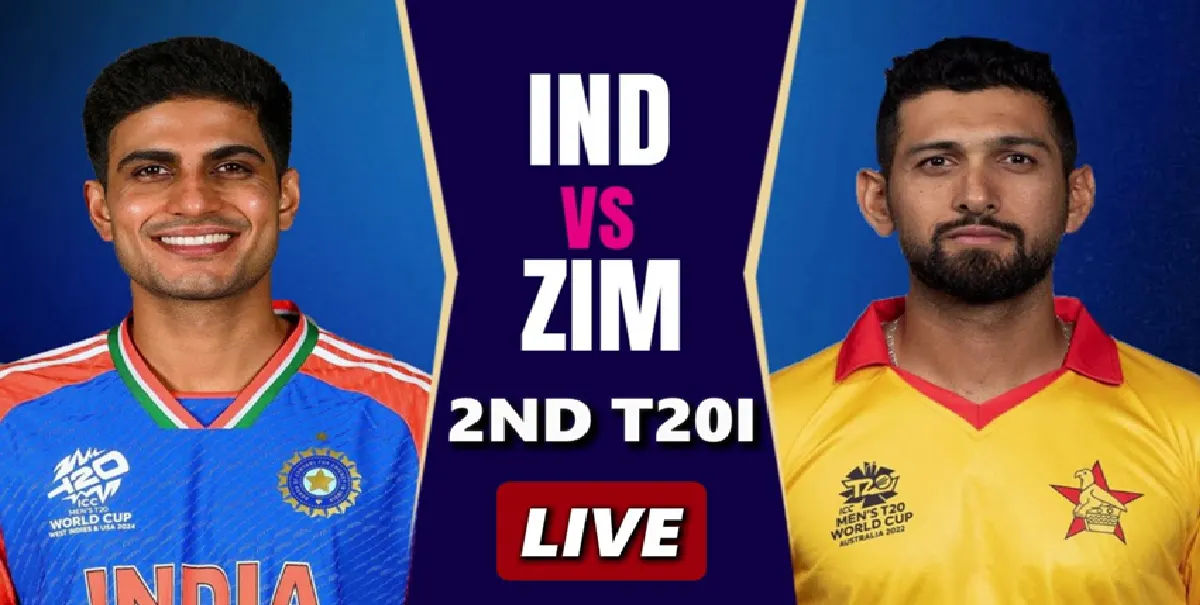
India vs Zimbabwe 2nd T20: Prince Yadav and Ravi Bishnoi Put India in Control
India moved into a commanding position against Zimbabwe in the second T20 International at the Harare Sports Club after young pacer Prince Yadav and leg-spinner Ravi Bishnoi caused major damage during Zimbabwe’s difficult run chase.
Zimbabwe were asked to chase a massive target of 220 runs after India posted 219 for five in 20 overs. At the latest verified update, Zimbabwe had been reduced to 77 for five after 10.4 overs, leaving them needing another 143 runs from only 56 balls. India were therefore firmly in control of the match.
India recover after losing early wickets
Zimbabwe captain Sikandar Raza won the toss and chose to bowl first, hoping that his bowlers could take advantage of the conditions in Harare.
The decision initially appeared successful because India’s opening pair could not produce a big partnership. Abhishek Sharma was dismissed for 10, while teenage batter Vaibhav Sooryavanshi made 20 before losing his wicket.
Sooryavanshi had been one of India’s main performers in the opening match of the series, scoring a rapid half-century. However, Zimbabwe managed to prevent him from playing another match-winning innings in the second T20.
India were placed under some pressure after the early wickets, but Ishan Kishan, Shreyas Iyer and Tilak Varma successfully rebuilt the innings.
Ishan and captain Shreyas added an important partnership before Shreyas was dismissed for 25 runs. Ishan then combined with Tilak to shift the momentum completely in India’s favour.
Ishan Kishan plays the leading innings
The biggest contribution came from Ishan Kishan, who scored an aggressive 81 runs from 44 deliveries. His innings included nine fours and two sixes.
Ishan attacked the Zimbabwe bowlers while also ensuring that India did not lose wickets in quick succession. His ability to find boundaries during the middle overs helped India recover from the early dismissals and move towards a total above 200.
He received excellent support from Tilak Varma, who remained unbeaten on 60 from only 29 balls. Tilak hit five fours and three sixes, producing a strike rate of more than 200.
The partnership between Ishan and Tilak was particularly important because it allowed India to accelerate dramatically during the closing overs. Their aggressive batting took India close to 200 before the lower order added the remaining runs.
India eventually completed their innings at 219 for five, giving Zimbabwe an extremely challenging target of 220 runs to win.
Zimbabwe begin the chase positively
Zimbabwe’s chase started reasonably well. Brian Bennett attacked Indian fast bowler Mayank Yadav and used his pace to collect early boundaries.
The home team reached 23 without loss after 3.1 overs, providing some hope that they could compete with India’s large total.
However, chasing 220 required Zimbabwe to maintain a very high scoring rate throughout the innings. Any period without boundaries or a series of quick wickets would make the task extremely difficult.
That is exactly what happened when India’s bowlers began to strike.
Yash Thakur provides the first breakthrough
Yash Thakur claimed the first important wicket when Bennett attempted an ambitious scoop shot. Instead of clearing the wicketkeeper, Bennett gave a catch to Ishan Kishan.
The dismissal interrupted Zimbabwe’s promising start and allowed India to apply greater pressure.
Soon afterwards, Prince Yadav struck with his first delivery. The Zimbabwe batter attempted to play towards the leg side but produced a leading edge, which was caught near third man.
Zimbabwe suddenly lost two wickets in quick succession and were reduced to 41 for two after 4.5 overs.
Prince Yadav dismisses Sikandar Raza
Prince Yadav delivered another major blow by dismissing Zimbabwe captain Sikandar Raza.
Raza is one of Zimbabwe’s most experienced and dangerous batters. His wicket was therefore crucial to India’s chances of controlling the chase.
The Zimbabwe captain attempted to cut a delivery through the off side, but the ball took an edge and travelled to wicketkeeper Ishan Kishan, who completed the catch.
Prince’s wickets demonstrated his ability to handle pressure despite his limited international experience. He maintained an attacking line and forced the Zimbabwe batters to take risks while chasing a demanding target.
Ravi Bishnoi deceives Dion Myers
After the fast bowlers had damaged Zimbabwe’s top order, Ravi Bishnoi increased the pressure through his leg-spin bowling.
Bishnoi dismissed Dion Myers with a well-disguised googly. Myers failed to read the direction of the delivery, which turned back sharply and struck the middle stump.
The wicket reduced Zimbabwe to 50 for four after 6.3 overs, leaving the home side in serious trouble.
Bishnoi also controlled the scoring rate. At one stage, his figures stood at one wicket for only 11 runs from three overs, an economical spell in a match where Zimbabwe needed to score more than ten runs per over.
Shivam Dube removes Madhevere
India continued to take wickets when all-rounder Shivam Dube dismissed Wessly Madhevere.
Madhevere charged down the pitch in an attempt to attack Dube, but he failed to make proper contact and gave a catch to captain Shreyas Iyer at mid-off.
Zimbabwe had consequently lost half their batting lineup for only 65 runs in 8.2 overs. Their required scoring rate continued to rise, while India gained almost complete control of the contest.
Why Prince Yadav and Ravi Bishnoi were important
The headline highlights Prince Yadav and Ravi Bishnoi because they played different but complementary roles.
Prince Yadav used pace and movement to take important wickets, including the dismissal of Zimbabwe captain Sikandar Raza. His breakthroughs prevented Zimbabwe from building partnerships during the powerplay.
Ravi Bishnoi used spin and variation to control the middle overs. His googly to dismiss Myers showed why he is considered a dangerous wicket-taking option in T20 cricket.
Together, they ensured that Zimbabwe could not build the momentum required to chase a target of 220.
India’s bowling attack also received contributions from Yash Thakur and Shivam Dube, showing that the team was not dependent on one individual bowler.
What the match means for the series
India entered the second T20 with a 1-0 lead in the three-match series after winning the opening game by seven wickets.
In that match, Vaibhav Sooryavanshi scored a rapid half-century as India comfortably chased Zimbabwe’s total of 125 for seven. India completed the chase in only 13.2 overs.
A victory in the second match would give India an unbeatable 2-0 series lead, making the third T20 effectively a dead rubber in terms of deciding the series winner.
Zimbabwe, meanwhile, must win the match to keep the series alive. However, their early batting collapse and rapidly increasing required run rate made an unlikely comeback extremely difficult.
Key points
India scored 219 for five in 20 overs.
Zimbabwe were given a target of 220 runs.
Ishan Kishan scored 81 from 44 balls.
Tilak Varma remained unbeaten on 60 from 29 balls.
Prince Yadav took two important wickets, including Sikandar Raza.
Ravi Bishnoi dismissed Dion Myers with a googly.
Yash Thakur and Shivam Dube also claimed wickets.
Zimbabwe were reduced to 77 for five after 10.4 overs at the latest verified update.
India were strongly placed to win the match and seal the series.
Conclusion
The second T20 was shaped first by India’s powerful batting recovery and then by an impressive collective bowling performance.
Ishan Kishan and Tilak Varma established India’s dominance by helping the visitors score 219. Prince Yadav and Ravi Bishnoi then ensured that Zimbabwe’s chase quickly fell apart.
Prince’s ability to take key wickets and Bishnoi’s control in the middle overs left Zimbabwe facing an almost impossible task. Unless the lower-order batters produced an extraordinary comeback, India appeared set to win the match and secure the three-match T20 series.
Tags:
Related Posts